Followers

Tuesday, 27 June 2023

When Mountains Called

Once a year go someplace you’ve never been before. And I did! Took a flight to Amritsar and then hauled a cab to an offbeat village called Dev Dhar and spent a couple of beautiful and peaceful days there.

Dev Dhar


All about my solo trip:


Let’s begin from the beginning. I had heard about this beautiful locale up in the mountains that, unlike the cliche Kullu-Shimla-Manali is unexplored, clean, green and with no crowds around. Planned a quick trip and took a flight to Amritsar. From there it was a taxi ride to the heaven that I was soon about to discover. I so desperately wanted to grab a lunch of Amritsari chhole kulcha at Brothers Dhaba before commencing my drive to Dev Dhar but the drive was around six hours from Amritsar hence dropped the idea.


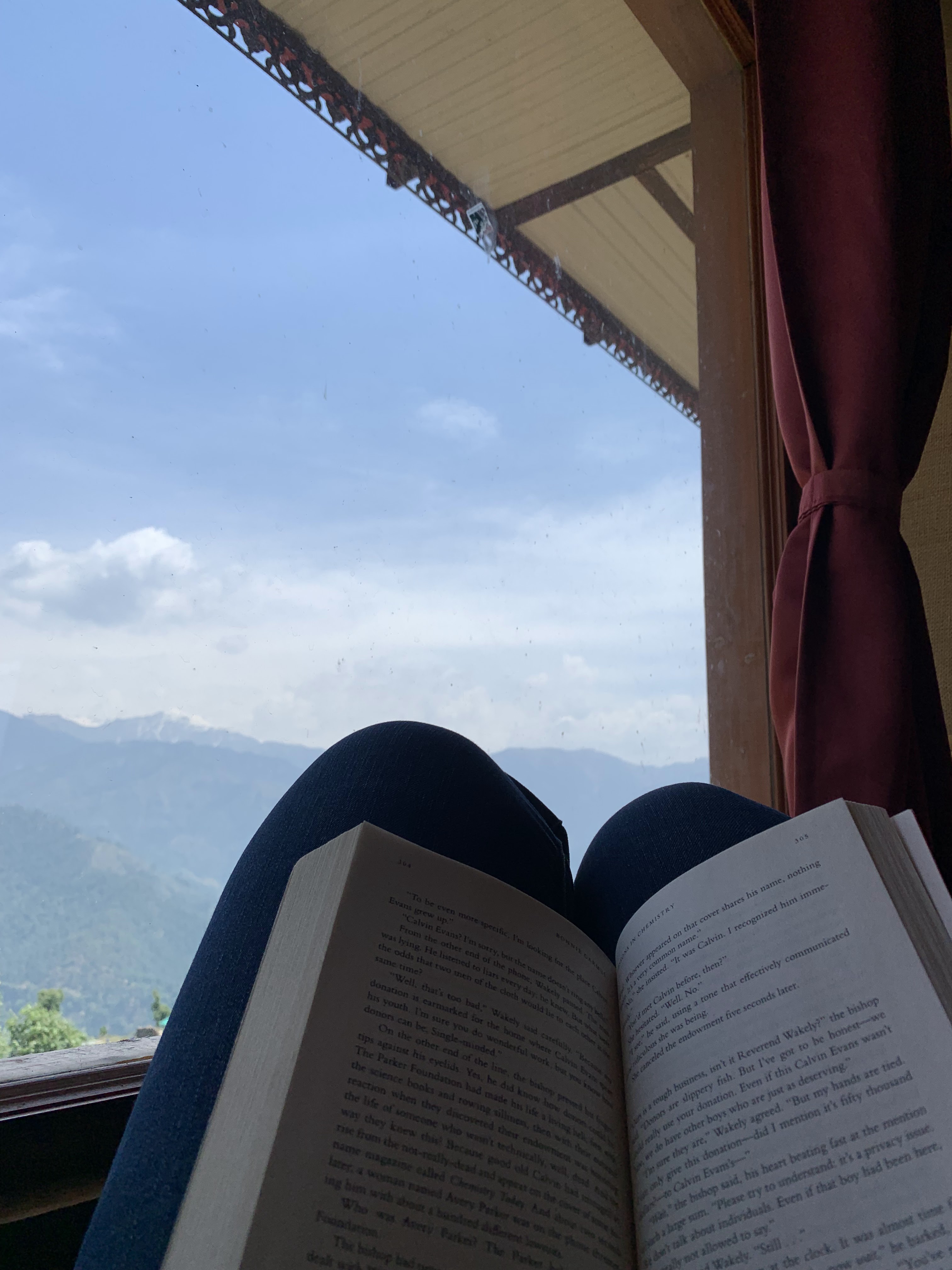
The first few hours of the drive were like any other highway trip but as we started ascending the mountains, it became more scenic and serene with the temperature dropping gradually with each hairpin bend. Oh, I must mention that I started at a scorching 42° C! The drive was interesting with an equally interesting driver who helped prevent my eyes from getting damaged by not allowing me to read, yes, too talkative a travel buddy! By the end of our fourth hour on the road, we both were hungry and tired and wanted a break. We started looking for a decent place for some tea and snacks. Found a roadside shack where we both enjoyed our much-needed sugary tea but no snacks :( as their kitchen was under cleaning for prepping for dinner time. We picked some biscuit packets, water bottles and chocolates and moved on. Hoping to reach our destination and a hot meal and cosy bed, we munched onto whatever our stash held. As the night approached, my buddy fell silent and started focusing on the curves of the mountain road ahead. And I slipped into some “Lessons in Chemistry”, the book I was reading.


A hiccupy bump here, a little swerve there, with the mobile network playing hide and seek, we reached the foothill of our destination. Our abode was barely 800 m as per google maps but the approach seemed imperceptible with a fork on the road where one prong led to a gate to a Govt office and the other to a kachcha road uphill. No network on our phones and unsure about which way to go, we retraced our path to a cluster of shops to ask for directions. Help came only in the form of a phone with a network! We called the eco-home we were headed to and in response were offered a guide who would come down to escort us up the path.


Locating my destination


A weather-beaten, cobbled kachcha pathway added more excitement to the dark night that enveloped us. I am convinced that adventure tourism is made of this! We followed the car that came to guide us but kept our gaze focused on the path. For them it was routine, for us, it was a first-time trip on a path like that, for my cabbie too! Manoeuvring our way through the narrow pathway with a valley on one side and hairpin bends along the way, we kept going without stopping and lo! lost sight of our lead vehicle. In our quest, we kept following the path realising that it got steeper and tougher to access. At one point the driver asked me to get off the car so that he could swiftly manoeuvre a steep turn. To date I am wondering, how did a few kilos less make any difference to his manoeuvring skills?


Just as I got off, the cool breeze tickled me, the trees swayed in welcome dance, the stars brightened their light, and the local guard dogs started barking at this stranger in their land. A mixed feeling of anxiety and anticipation took over me as I was wondering about what the dogs had in mind for me. Just then a villager emerged from inside a hut and quietened the canines. He already knew where we were headed and asked the driver to take a u-turn and drive back a few hundred meters. He also mentioned that we would meet a girl on the road back and that she was waiting for us - eerie, isn’t it? No street lights around, just the starlit night with our car’s headlight cutting across and this “girl waiting for us”! Imagination is an unbridled horse, I imagined a lantern in her hand and an expressionless face too - read too many Ruskin Bonds while growing up.


We drove back after my day’s workout of climbing up and running down a mountain and were indeed met by a girl at a turn. Shakuntala greeted us and guided us into the parking bay of the eco-home that was to be my abode for the next three days. Anxiety evaporated as I followed her to the quaint cottage perched upon a cliff glowing like a gem in the darkest of nights. 

The cafe and the loft library


The welcome


I was welcomed by friendly people and friendlier canines. They let the dogs stay here, feed them and treat them well and never shoo them away. Needless to say, happy positive vibes welcome you to Colonel’s Highland Retreat at Village Dev Dhar! Twelve beautifully appointed rooms constructed in the traditional way using local techniques and hands, kept warm in the cold winter days and cool in the sparse summer they get here. Their chef prepares the most delicious local fare but holds the expertise to dish out plenty of exotic international dishes too. Just that you need to express your desire in advance as they need to source the exotic ingredients from a town nearby. If you are game for exploring the local, authentic cuisine, you are in for the most delightful treat. 


Pisti


After a sumptuous meal, my first for the day, I was guided to my room, where I was greeted by Pisti, the prettiest pup with the kindest eyes! And the second one to welcome me to my room was a pretty large eight-legged arachnid. I have a mortal fear of them arachnids and do not even say their name, the one that starts with “S”. I don’t even type their name, the smartphones show you the images as you type! No, I don’t shriek and run, just quietly walk out and seek assistance. Lucky came to the room to help and astonished me by simply picking the lady up and leaving her outside, they do not harm any living beings here! On my insistence, he left the broom in my room, after making me promise him that I would only scare them away and not be violent with them, and bid good night. Incidentally, I was the only guest there that night, and as a Rajasthani who has never been in the mountains and never travelled alone, it was overwhelming for me to be staying by myself in a room where I was welcomed by, you know who! To combat the situation, I invited a roommate, and gladly Pisti hopped in and plopped herself on the rug in my room. We spent a peaceful night thereafter, taking sneaky peeks at each other once in a while.

My room
Pisti on her rug


First day of waking up in the mountains


An early riser, I woke up before my alarm went off and was left spellbound by the view outside my window, I deliberately left the curtains open in the night. This was a corner room on the second floor, which had large windows that accorded the most spectacular of views. The sunrise and its orange glow in front, the sparkling snowcapped peaks to the left! If this isn’t heaven, what is? I spent a whole hour just gazing at the spectacle in complete disbelief when my revelry was broken by Lucky and the hot masala chai he brought me. The chai lover in me was pleasantly delighted by a flask full of chai, not a measly single cup! Chai must always be consumed in the plural.

My breakfast


Finished my book


I quickly freshened up to go outside and explore the surroundings. Lo and behold! We were all by ourselves, perched on a side of the mountain with the most breathtaking surroundings. A vertical panorama would begin with potato farms, tall Devdars and Silver Oaks, snowcapped peaks, and cottony white clouds merging into the azure sky. Now the biggest dilemma was whether to stay inside in my lovely room or go out and explore the neighbourhood - both were strong temptations. But, first the breakfast. There is a menu that you can refer to but the best option is to leave the decision to the chef who will then treat you to the most delicious seasonal delicacies for each meal. I gorged on the most delicious aloo paranthas with dollops of butter and fresh dahi, followed by another of those magical masala chai cups. I am told, it wasn’t the season otherwise they would have made “Buransh ki chutney” for me - a pesto made of freshly plucked local flowers!


During these two days of my stay here I chose to laze around a bit on the first day. I

I woke up to this view

finished my airport-find and revelled in dolce far niente. Hadn’t had this experience of not-doing anything in a long long time. A place fit to be called heaven, fresh hot meals and chai whenever you want, a few friendly canines to keep you company and an unputdownable book - BLISS in capital letters!


All about Colonel’s Highland Retreat


This eco-nook by Col.Ajay Raina is constructed using local techniques, with help from local folks, is run on solar power, produces no garbage, serves locally grown produce, employs locals and provides shelter to the stray dogs who decide to walk in! They do not have TVs in the rooms but keep the latest of jazzy Bluetooth speakers for you to play your favourite music on. The cafe has a loft library with board games and lots of books and a seldom-used TV too, just in case any guest requires one. It is a tiny little paradise tucked away from the maddening crowds of the popular tourist destinations and yet only an hour away from the paragliding haven of Bir-Billing. There are a plethora of activities and attractions nearby but a free advice here would be to just explore the neighbourhood on foot and relax in the garden, cafe or your room. My day went by quite peacefully, literally too as there was no cellular network there. I had latched onto their Wi-Fi for WhatsApp connectivity and that was good enough to keep a balance between staying lost and being found. A sumptuous lunch, evening tea and lovely dinner and time to call it a day. Pisti as my roomie and I tucked myself into my most comfortable bed.

My room in the corner on 2nd floor


The surprise on the second day


The weather Gods had a surprise planned for me and my next morning began with
clouds knocking on my door and inviting themselves inside to share a cup of tea! There was a storm brewing somewhere but the fringes of the storm are actually very pretty, fluffy and pristine white clouds that float like fairytale yachts in the sapphire ocean of the sky. They bump around the mountain peaks and tree canopies like those bumpy cars in amusement parks. My big TV of a window turned into a movie scene from a Disney blockbuster. All I had to do was imagine some cascading waterfalls and unicorns. 


Day 2 - My view


My first ever trek at more than 7000 ft


A little nip in the air, my scarlet jacket making its appearance and walking shoes to
give an extra skip to the feet, a belly-full of puri-bhaji and off I went for a little trek to the peak 360 in Phula-Ri-Dhar. The temperature now was 16-18°C. Sporadic showers teased me along the way as I felt like “Koda” from “Brother Bear” and skipped (okay, panted a little too) my way up the mountains. My companion was Shakuntala who knew not just every human but also every dog along the way. When we got caught in a sudden downpour we took shelter at a “sarkari” guest house where Dadu (one of Shakuntala’s many relatives) treated us to an amazing saunf-mint tea. A few hundred pictures and we marched on to reach the 360! Now what I saw here can not be expressed in words, nor could it be captured in my camera. This was a feeling where one feels being one with the universe. The highest peak of the region and serenity all around. An abundance of the colours green, blue and white was so soothing to the eyes. A few hundred more pictures later we began our descent and reached our “home” in time and with a great appetite for lunch. The rest of the day was blessed by heavy rains and I was holed up inside my nest high up with Pisti for company and occasional interruptions of food and tea. 

At peak 360

The lovely trek


An honest confession: I have not had a more pleasant holiday before!


This was a vacation where there was no itinerary with must-dos and must-sees highlighted in blue. There was no agenda, no rush, no shopping list too. It was peace and I repeat, dolce far niente writ all over my time there. All credit goes to the creator of this lovely space who kept it basic and simple and just so real. This is an ideal getaway for artists, writers, thinkers, peace-seekers, yoga practitioners, bird watchers, adventure enthusiasts and nature photographers. This is an ideal hideaway for corporate honchos, homemakers, executives seeking respite from targets, children, grandparents and even pet parents with their pets. This is an ideal tuckaway for escape seekers, for those who just want to recharge and rejuvenate.


I have to go back in monsoon, in winter, when it snows, in next summer too; I have to go back whenever I can and this time I want to take my orchestra of a family along for the beds in the loft must be used by the tiny people who would love to play doll-house and sniper’s-position there. Even if they are not so tiny anymore and don’t want to, I will ensure they do :)

The loft and the bedroom


Getting there:


The garden
The closest airports are Kangra, Amritsar and Chandigarh with Kangra being the closest. You could also fly into Jammu and drive further ahead from there. Your drive from the other airports, other than Kangra would be anywhere between 6-8 hours long but the journey is scenic and doesn’t bore you out.


Booking your eco-room:


You can find them on various OTA platforms or can simply reach out to Col.Raina on his phone, number on personal messages only. Else you may drop an email at ruralfootprints@gmail.com.


How to thank me for this heavenly find:


Flowers only, please. Okay, chocolates are fine too.


Friday, 28 April 2023

A photoshoot date with the long-legged lasses


The first time I went to see these magnificent beauties, I filled my fuel tank, drove some 100-odd kilometres, paid a fisherman to take us up close in his boat and picnicked the whole afternoon in a ganne ka khet. That was some ten years ago. The place was Bhigwan and the experience was surreal to say the least. That was the time when the travel agents had still not ‘invented’ the flamingo walks and flamingo sighting tour plans. Life was simple with the only commercials involved being the tip to the boatwala and the snacks we bought. Little did I know then that a couple of years later I would become neighbours with these very flamingos. That they would be dining in my backyard each day and flying above my head in waves every evening. Being around them for 8-9 years now, they started to appear like ghar-ki-murgi (in a few clicks they resemble the murgis too), till swanky cars from Mumbai started flocking our NM with their big over-shoulder zoom lenses and tall and lanky teenagers-like tripods. The many pictures in many FB groups and Insta pages inspired and pushed me to get my own flamingo shots- of pink and white and very pretty birds. But these hungry-as-a-Labrador birds royally refused to lift their heads for some good pictures. Besides, they aren’t that pink too, some are murky grey and the others prefer to remain ugly and dirty oblivious to the many cameras staring at them.


Here are some up-close moments with the flamingos of NM. Had to maintain a safe distance to not scare them away or rather keep myself safe. Imagine if they decided to shoo us away, they clearly outnumbered the humans there. I waited for them to take flight, they usually leave this pond by 6:00 pm but today they wanted to hang around till late I guess. I had my household chores to do, so I left. Left them alone to gorge to their hearts’ content. They would soon leave for more comfortable and abundant surroundings to return by the end of the year.


Au revoir, flamingos!


#flamingo #birds #NaviMumbai

Friday, 7 October 2022

Rann Utsav - All you want to know


Rann Utsav welcomes you


Every year nature presents a clean white crisp canvas and invites the artists to use their wild imagination to colour it in the most vibrant shades. The canvas is the vast expanse of the Great White Rann of Kutch and the artists, us!


Rann Utsav is an amalgamation of everything cultural, energetic, rustic and charming. A festival that celebrates life and colour. People throng the Rann of Kutch in large numbers each year when the monsoons have receded leaving behind a crusty layer of salt covering the entire land of Rann. The salt is so pure and white that it glistens in the moonlight. A full moon night experience at the Rann gives an illusion of one being inside a snow globe. Magical, to say the least.


When does the Utsav happen?

Just when the Weather Gods bless the land of the dry Rann with an abundance of water to let the salt come up and form a crust and just when the Sun God decides to be kinder to the open land. In other words, the time is post-monsoons and through the entire winter season. The Utsav starts near Diwali time in October and is on till winters last i.e., February of the subsequent year.

What is the hullabaloo all about?

A travel experience like none other! Staying in a tent in a temporarily created village. Experiencing the essence of Gujarat in just a couple of days. A tent stay yet luxurious. A complete holiday experience with adventure, luxury, cuisine, shopping, sightseeing; all aspects are taken care of. Authentic flavours of Gujarat and from other parts of the country too prepared by chefs with a five-star experience. Folk dances and arts keep you enthralled. And when you are just too tired to walk back to your tent, a buggy ride through your make-believe village to your little hut/tent.

Need we add more?


How long must one stay there?

A two-night stay is definitely a must to be able to explore the regalia that Rann Utsav is. After these two fun-filled enriching days, you might get tempted to extend your stay by a couple of days more. The days at Rann Utsav are busy, very busy with action all around, evenings are engaging and entertaining and the dusk enhances the magic of the white desert. A wholesome experience can only be had over a couple of days.


Dhamaal - The Siddi Tribal dance


What can one do at the Rann Utsav?


1. First and most cherishable is the stay in a tent, rather a tent city. You have a neighbourhood which also stays in tents, now is that not exciting enough? Tents that are equipped with all the luxuries of a hotel room, beds, electricity, air-conditioning, tea-coffee maker, amenities and a spic n span washroom too.

2. Gujarat is known for its various arts and crafts. Visit the craft bazaar and interact with the artisans directly. Pick what fancies you. Home decor, accessories, home furnishings and pottery are among the most popular products here.

3. Utsav, mela and fair are synonymous with joyrides. Here too there are many rides available - big or small, fast or slow, high or low, take your pick and enjoy the ride. Past Rann Utsavs have seen para-sailing, ziplining as popular activities.

4. Gujarati cuisine is very popular world over. Who doesn’t prefer carrying methi theplas for a road trip? Indulge in the authentic Kutchi flavours cooked in pure desi ghee with the most aromatic freshly-grounded spices. A Gujarati thali is a must-have when at the Rann Utsav.

5. Close to the venue of Rann Utsav are the culturally rich and very famous villages of the Banni Grasslands. Visit these villages during the day and interact with the villagers who also are skilled herdsmen (goats, sheep, cows, buffaloes, camels too) and craftsmen and create wonders in needlework, lacquer, wood, leather etc. Meet the villagers and visit their workshops, learn a stitch to two too! And do not forget to taste the fresh and sweet Mavo at Bhirandiyara and Kutchi dabeli along the way.

6. Kutch must be visited during the full-moon phase though other days too are equally enchanting. But the charm of a full moon night in the white desert definitely stands out. The snow globe experience as you stand on the crusty white salty earth of the Rann and are engulfed by the pearly white light of the moon reflected by the shining salt crystals. This is the most serene and surreal experience that one can get at the Rann Utsav.

7. Mention of the desert brings the thought of camels instantly, they are in an eternal relationship with each other. Camels can navigate large expanses of deserts with ease, be it the sandy desert of The Thar or the salt-crust desert of the Rann of Kutch, camels can be seen loitering around on the deserts, sometimes taking a passenger for a joyride and sometimes just like that without any purpose.

8. Gujarat holds the distinction of having the longest dance festival in the world - Dandiya / Garba lasts full 10 days! There are other dance forms too from Gujarat that are famous for their history and style. Siddi tribe from the jungles of Sasan Gir perform a vitality-infusing Dhamaal dance, do not miss their live performance. They originally hail from Africa, but have settled in Gujarat for long.


What’s more, you also get a sightseeing tour of other attractions of Kutch on the last day of your stay at The Rann Utsav. While you carry on with an engaging tour which takes you to the villages, the local artisans’ homes, the many museums and other attractions, do not forget to get down from your ride and take a picture at the Tropic of Cancer which cuts across the road that connects Dhordo to Bhuj. There is a magnetic field too along the way where if left in neutral, the car moves slightly backwards.

The bazaar at the Utsav


How to reach?


Bhuj is your nearest railway station as well as the airport. If you are booked to stay at the Rann Utsav, their pickup buses will meet you outside the railway station / airport. Similarly, you will also get a drop to the railway station / airport on the day you check-out.


Rann Utsav can easily be called a tour of all of cultural Gujarat in just a couple of days. For other destinations, monuments, wildlife parks, pilgrimages and other attractions though one needs to take a tour of the state. There is so much that one can see and explore in Gujarat. Truly a vibrant state.


Sunday, 20 February 2022

Patan and Modhera - A day excursion

Ahmedabad - visited, revisited, explored, seen, experienced, said the one who travels often to this World Heritage City. Suggest someplace new, please. “How about a walk through chapters of history, stanzas of exquisite carvings, paragraphs of architectural marvels, and tattered dog-eared papers of thousands of years ago?”, suggested another.


And off we embark on this one-of-a-kind excursion which takes you to two of the most beautiful architectural wonders from thousands of years ago, one of these wonders was obscurely hidden from the world and buried under the silt of the now extinct Saraswati river and the other is a creation that can amuse a common man and a scientist alike. I am taking you to Modhera and Patan today. Let’s go!


A hearty breakfast is a must before you embark on this day-long excursion. Leave early so that you get leisurely time at both these monuments and yet return to Ahmedabad in time for your evening tea.


First, Patan: The world-famous Patola weave haven


Patan is on the World map for two major reasons - one, the GI tagged Patola weave sarees are from this small village of weavers, and second, the World Heritage site of Rani Ki Vav is located here. The same monument that has marked its presence on a hundred rupee note too.


Step wells are the motels of yore. Tired weary travellers would rest here where there was an abundance of fresh drinking water, food, and a recharging station for their e-vehicles (alright, not exactly an ‘e’ vehicle but green and sustainable nonetheless- the horses, camels and the likes). Step wells were also the cafés where kitty parties were organised, well in a way. Women would meet up at step wells on the pretext of ‘fetching a pail of water’ and unlike Jack n Jill, they did not fall down but sat down to have those saas-bahu chats. Am assuming that saas-bahu matters must be as old as time immemorial.


Imaginations galore! Step wells were perfect examples of rainwater harvesting, community service, and a civilisation thriving in harmony. 

UNESCO World Heritage monument of Rani Ki Vav - Built in the memory of 11th-century Chalukya King Bhima-I by his loving consort Rani Udyamati, is adorned with beautifully carved relief sculptures of Gods and Goddesses, and other articles of everyday life of those times. The Vav unexpectedly rises in front of your eyes as you search for it in the beautifully manicured surrounding gardens. Silted over and hidden from the world, this majestic stepwell has been painstakingly, one brushstroke at a time, revealed and brought to us by The Archaeological Survey of India. The ASI maintains the pristine beauty of the monument with utmost care. Unlike the usual step wells, Rani Ki Vav has just one facade that rises or rather dips down majestically in front of your awed eyes! From atop the well, you can have a complete view of the monument, take innumerable pictures and indeed exclaim in amazement. A closer look reveals the exquisitely carved sculptures, those of Gods and Goddesses and of other celestial beings. These sculptures symbolise water and fertility. Many apsaras and nagakanyas adorn the inner walls and vertical panels of the well. Other celestial beings like the Digpalas (custodians of the directions), asuras, yoginis, and other birds and animals are also beautifully depicted on the walls. Another major attraction is the depiction of Lord Vishnu (the water God) in three niches of the well. 


One can only marvel and wonder at the scientific knowledge of the masons and architects of those times who brought this beautiful creation to life, even leaving their signatures here and there in the form of mason’s marks. Wooden pegs that held the rock bricks together, supporting pillars that gave strength to the structure and prevented it from caving in, are all examples of ancient architectural knowledge.


Each sculpture that one sees inside the well has a certain explanation and story to it which of course should be left for the guide to share when you physically visit the monument. One particular pattern that one can not miss is the geometrical designs on the walls of the well that have proudly taken a spot on the famous Patola sarees. The unmissable patterns are intricate lattices of Swastikas, Triangles, Rectangles, and other geometrically symmetrical patterns.


A little bit about Patola :


The world-famous weave takes a lot of planning and calculations to be put together. First and foremost is to prepare the “blueprint” of the pattern. Blueprint - because we are creating an exceptional marvel in each saree and it requires as thorough a planning as is required while creating a skyscraper maybe! The thread then is dyed as per the pattern; measured, marked, dyed to accuracy so that the colours fall corresponding to their respective places. Phew! So much of an effort and we bargain for a discount! One double-ikkat Patola takes anything between 3-9 months to complete and no two Patolas are alike. Now there are only a handful of weavers who are carrying on with this legacy, the younger generation is not motivated enough to join the family tradition of creating these Patola weaves.


Our second attraction - The Sun Temple at Modhera.


Older than the other famous cousin, Sun Temple of Konark, Modhera precedes Konark by around a hundred and twenty-five years. The temple comprises three components- a Gudhamandapa (prayer hall), a Sabhamandapa (assembly hall), and a Kund (reservoir). The wonder though lies in the fact that the Tropic of Cancer bisects the Temple complex (yes all three components) in equal halves, and during the equinoxes, the rays of the rising sun fall straight where once the deity graced a throne, passing through yes! you guessed it right - all three components again.


The temple from the Solanki dynasty era was built around the time when the forces and elements of nature took the center stage as Gods and Goddesses. Air, water, fire, earth, sky were venerated and worshipped. The temple complex exudes a certain peace and charm and radiates certain energy which would leave you calm and composed and would serve as the biggest de-stressor. 


As one crosses over the main gates of the complex and walks towards the temple, the first marvel to greet is the Kund, also known as the Ramakund. Served as a purifying and cleansing water body for the weary visitors who undertook days or weeks-long journeys to come here, the Kund also has 108 small and big temples/shrines. The rectangular reservoir has comfortable steps that lead one down to the water level and are built in such a pattern that the bathers get privacy too.


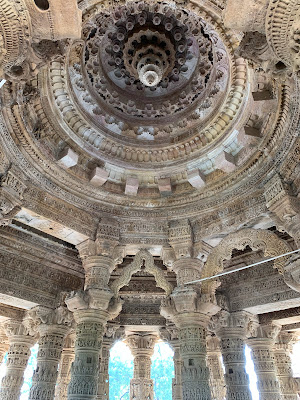
Next is the Sabhamandapa, adorned with beautifully carved pillars and walls, with twelve Adityas all around - the twelve versions of the Sun, each representing a month of the calendar. Scenes of Mahabharata can also be seen carved on a few pillars. 


An expert tip: Do take a selfie with the ceiling of the Mandapa, that comes out exceptionally well.


The most magical of the three components of the temple is the Gudhamandapa, the throne of the deity. Though now, the spot where God once presided is empty, the straight piercing rays of the Sun during the equinoxes penetrates the three components and brightly illuminates not just the spot but the entire shrine. This isn’t all to marvel at, hold the compass on your phone and be equally amused. The tropic of cancer passes through the temple and bisects the whole complex in two equal halves. 


The Gudhamandapa, like the other sections, is equally beautiful with carvings on its pillars and walls. The pillars are covered with intricately carved statues of men and women, one particularly noticeable is that of a mother holding a baby in her arms.


After the Gudhamandapa, step out to take a leisurely walk around the temple, marveling at and clicking pictures of the carvings on the outer walls of the temple. Surya (Sun God) is shown in many different avatars, dancers, apsaras, animals and birds and many other interesting sculptures are sure to hold your attention for long.


The Archaeological Survey of India ensures that these monuments are immaculately preserved and taken care of. Click to your heart’s content as they generously allow the tourists to take as many pictures as they might want. The only request: be a responsible tourist.


Time for us to head back to Ahmedabad after a drink of cool and refreshingly clean water. Though there are a few eating joints along the road, we recommend you carry a packed lunch with you. 


An expert tip: A visit to a place like Modhera and Patan must not be forgotten with time, it should be chronicled in a journal with photos and illustrations.


Tea at one of the on-the-way places or your hotel at Ahmedabad - the choice is yours. Our promise: this is one excursion that you would want to take over and over again. Cherish the day’s experience till we come back with yet another account of yet another interesting outing.


Till then, happy holidaying!


Saturday, 15 May 2021

Concealed Underground library - Largest in Asia


Villages after villages blur past as we make way to the temple of the Kuldevi of the Bhati Rajputs - Shri Bhadariya Rai Mata Ji. The temple sees thousands of visitors each day, all the year-round. Newly wedded couples who come to seek blessings from the Goddess for a blissful matrimonial life can be seen in large numbers. In the middle of the Thar, this temple and its surroundings are truly an Oasis of relief, respite, faith, love and knowledge.

A newly wedded couple seeking the blessings of Shri Bhadariya Rai Mata ji


Knowledge- We are talking about a library that houses more than 900,000 books, and is sixteen feet under the ground, and is the largest library in Asia! Owing to its design and construction, with no air-conditioning inside, the library remains significantly cooler than the environs outside. The holding capacity of the library is an astounding 5000 people at the same time!


Brief History


Sant Shri Harivansh Singh Nirmal, fondly known as Nirmal Baba or Bhadariya Maharaj, came to this small village in Jaisalmer district of Rajasthan some seven-eight decades ago. Little is known about him and his life prior to his coming to Bhadariya Ji. He was an avid reader and was fond of collecting books. He believed that the greatest God / Goddess of all is “Knowledge” and with that thought in mind, he envisioned a library that would house every printed book on every research-worthy subject. And thus was born the idea of creating this library. 


Another notable contribution of Nirmal Baba is the Gaushala (cowshed) at Bhadariya Ji. Babaji, a believer of Gau-seva would leave no stone unturned to save the indigenous Indian Cow from the abattoirs and butcheries across the then porous international border. He even bought these cows from the tribals who felt they could make more money by selling the cows to those who found a dead cow more useful than a living one. Thus came the gaushala into existence. From those few cows now the Gaushala is spread over 1 lakh bighas (1 bigha in Rajasthan equals 27,225 sq ft) of land. Run on the donations received from devotees, the Gaushala tends to more than 45,000 bovines. And yes, this is one of the largest Gaushalas in the country.


The library


Spread over acres and acres of land, oops(!) correction, spread under acres and acres of land, the access to the library is through a humble but wide stairway. Once inside, you are greeted by rows and rows of neatly arranged books in glass-covered cabinets, 562 to be precise. The shelves reach up to the ceiling, with the top ones still empty and awaiting the arrival of more books. Maharaj ji’s ambition was to have a copy of every printed book on every subject here in this library. The library is a treasure trove for book lovers, bibliophiles and research scholars. Rare manuscripts and scrolls are also painstakingly preserved and given a place of their own. The treasure here holds books on varied subjects including literature in many languages, science, history, politics, world religions (literature and religious books of 7 out of a total of 11 major religions of the world), geography, philosophy and even dictionaries and atlases. One can even find the original unedited copies of the holy books here. The ones we buy from the market are usually translations and concise copies. 


There is a restoration room as well, where the book-doctors mend and tape the tatters and tears if any and re-write where an ageing book requires a little assistance with the blurred words. They come in old and worn-out and leave fresh, crisp and securely bound :)


Comfortable and easy to navigate and explore, the library as I mentioned earlier, remains cool all through the year. Long corridors have huge mirror walls at the ends, giving an illusion of them being infinitely never-ending.


How to reach


By road, it takes barely an hour and a half to reach Bhadariya from Jaisalmer (79 km). Jodhpur too isn’t very far, at just around 220 km (close to 3 hours). And both these cities are well connected by air, rail and roads.


Once here


We began with Bhadariya Rai Mata Ji’s Darshan. Next, we visited the temple dedicated to Nirmal Baba and the museum that gives a glimpse into his personal life through carefully preserved articles and belongings of Maharaj Ji. Besides his personal articles of daily use, the museum also has his collection of currency (coins and currency notes) and stamps. 


Done with the temples and the museum, we returned to the office of the trust near the main entrance. A lassi Prasad at the office is a must-have. Keep the appetite for a tall glass! Having given permission by the office, we were escorted by one of the attendants into the library. We spent a leisurely time there scanning through shelves upon shelves of the invaluable treasure of knowledge. Our guide shared anecdotes and further information about Maharaj Ji with us while patiently taking us around the library.


When planning a visit


The library is yet to be formally inaugurated and is also awaiting the addition of very many books hence visiting without prior permission might turn out to be a futile effort. It is suggested that you reach out to the temple trust under whose management the library falls, and seek an appointment before taking that journey through the picturesque golden landscapes of rural Rajasthan.  You may either drop an email to them or seek an appointment telephonically. The library sees an average of 60,000 scholars from around the globe each year.


A bibliophile’s paradise, a book lover’s utopia, and to all the others a wonder to be visited. Include a quick trip to Bhadariya Ji during your next quest of Rajasthan, and be mesmerised by another “Jaane Kya Dikh Jaaye” wonder!