Followers

Showing posts with label Bazaar. Show all posts

Friday, 7 October 2022

Rann Utsav - All you want to know


Rann Utsav welcomes you


Every year nature presents a clean white crisp canvas and invites the artists to use their wild imagination to colour it in the most vibrant shades. The canvas is the vast expanse of the Great White Rann of Kutch and the artists, us!


Rann Utsav is an amalgamation of everything cultural, energetic, rustic and charming. A festival that celebrates life and colour. People throng the Rann of Kutch in large numbers each year when the monsoons have receded leaving behind a crusty layer of salt covering the entire land of Rann. The salt is so pure and white that it glistens in the moonlight. A full moon night experience at the Rann gives an illusion of one being inside a snow globe. Magical, to say the least.


When does the Utsav happen?

Just when the Weather Gods bless the land of the dry Rann with an abundance of water to let the salt come up and form a crust and just when the Sun God decides to be kinder to the open land. In other words, the time is post-monsoons and through the entire winter season. The Utsav starts near Diwali time in October and is on till winters last i.e., February of the subsequent year.

What is the hullabaloo all about?

A travel experience like none other! Staying in a tent in a temporarily created village. Experiencing the essence of Gujarat in just a couple of days. A tent stay yet luxurious. A complete holiday experience with adventure, luxury, cuisine, shopping, sightseeing; all aspects are taken care of. Authentic flavours of Gujarat and from other parts of the country too prepared by chefs with a five-star experience. Folk dances and arts keep you enthralled. And when you are just too tired to walk back to your tent, a buggy ride through your make-believe village to your little hut/tent.

Need we add more?


How long must one stay there?

A two-night stay is definitely a must to be able to explore the regalia that Rann Utsav is. After these two fun-filled enriching days, you might get tempted to extend your stay by a couple of days more. The days at Rann Utsav are busy, very busy with action all around, evenings are engaging and entertaining and the dusk enhances the magic of the white desert. A wholesome experience can only be had over a couple of days.


Dhamaal - The Siddi Tribal dance


What can one do at the Rann Utsav?


1. First and most cherishable is the stay in a tent, rather a tent city. You have a neighbourhood which also stays in tents, now is that not exciting enough? Tents that are equipped with all the luxuries of a hotel room, beds, electricity, air-conditioning, tea-coffee maker, amenities and a spic n span washroom too.

2. Gujarat is known for its various arts and crafts. Visit the craft bazaar and interact with the artisans directly. Pick what fancies you. Home decor, accessories, home furnishings and pottery are among the most popular products here.

3. Utsav, mela and fair are synonymous with joyrides. Here too there are many rides available - big or small, fast or slow, high or low, take your pick and enjoy the ride. Past Rann Utsavs have seen para-sailing, ziplining as popular activities.

4. Gujarati cuisine is very popular world over. Who doesn’t prefer carrying methi theplas for a road trip? Indulge in the authentic Kutchi flavours cooked in pure desi ghee with the most aromatic freshly-grounded spices. A Gujarati thali is a must-have when at the Rann Utsav.

5. Close to the venue of Rann Utsav are the culturally rich and very famous villages of the Banni Grasslands. Visit these villages during the day and interact with the villagers who also are skilled herdsmen (goats, sheep, cows, buffaloes, camels too) and craftsmen and create wonders in needlework, lacquer, wood, leather etc. Meet the villagers and visit their workshops, learn a stitch to two too! And do not forget to taste the fresh and sweet Mavo at Bhirandiyara and Kutchi dabeli along the way.

6. Kutch must be visited during the full-moon phase though other days too are equally enchanting. But the charm of a full moon night in the white desert definitely stands out. The snow globe experience as you stand on the crusty white salty earth of the Rann and are engulfed by the pearly white light of the moon reflected by the shining salt crystals. This is the most serene and surreal experience that one can get at the Rann Utsav.

7. Mention of the desert brings the thought of camels instantly, they are in an eternal relationship with each other. Camels can navigate large expanses of deserts with ease, be it the sandy desert of The Thar or the salt-crust desert of the Rann of Kutch, camels can be seen loitering around on the deserts, sometimes taking a passenger for a joyride and sometimes just like that without any purpose.

8. Gujarat holds the distinction of having the longest dance festival in the world - Dandiya / Garba lasts full 10 days! There are other dance forms too from Gujarat that are famous for their history and style. Siddi tribe from the jungles of Sasan Gir perform a vitality-infusing Dhamaal dance, do not miss their live performance. They originally hail from Africa, but have settled in Gujarat for long.


What’s more, you also get a sightseeing tour of other attractions of Kutch on the last day of your stay at The Rann Utsav. While you carry on with an engaging tour which takes you to the villages, the local artisans’ homes, the many museums and other attractions, do not forget to get down from your ride and take a picture at the Tropic of Cancer which cuts across the road that connects Dhordo to Bhuj. There is a magnetic field too along the way where if left in neutral, the car moves slightly backwards.

The bazaar at the Utsav


How to reach?


Bhuj is your nearest railway station as well as the airport. If you are booked to stay at the Rann Utsav, their pickup buses will meet you outside the railway station / airport. Similarly, you will also get a drop to the railway station / airport on the day you check-out.


Rann Utsav can easily be called a tour of all of cultural Gujarat in just a couple of days. For other destinations, monuments, wildlife parks, pilgrimages and other attractions though one needs to take a tour of the state. There is so much that one can see and explore in Gujarat. Truly a vibrant state.







Tuesday, 13 August 2019

When in Jaipur... Part 2 - Jaipur in a Day


The name that resonates with Royalty, Vibrance, Colours, Music, Festivities, Forts and Palaces, Leheriya and Bandni, Kachoris and Dal Bati Churma, and the colour Pink is JAIPUR. A must visit destination on every traveller’s bucket list, Jaipur has so much to offer to everyone that a day is too short a duration to experience this lovely carnival of a city. This is a short guide to quickly cover sightseeing of this beautiful city in just a day. For shopping you need another day and a comprehensive guide is available here.


Begin the day with the tour-des-Forts. Jaipur proudly boasts of presence of three majestic hill Forts - Jaigarh, Nahargarh and Amer. Each Fort is definitely worth a visit and no two forts are alike, while Nahargarh offers panoramic views of the Pink City and has a modern art gallery inside its courtyards, Jaigarh houses the largest cannon in the world The Jai Vaan and also a thoughtfully curated weaponry museum but the most visited Fort remains the Amer Fort or Amber Fort reasons being, easy accessibility as compared to the other two Forts, original grandeur restored and preserved well, is surrounded by many manicured gardens, is a chosen location for many a film shoots and Elephant rides add another huge attraction. Amer also is home to Mata Shila Devi, a revered Goddess among the Rajputs and many other communities from Rajasthan and neighbouring states. Since this article is about covering the city in a day, we recommend you take a jeep ride up to the Fort to save time. We highly recommend you to take the assistance of an audio / personal guide as the visit remains incomplete unless you understand the details of every aspect of not just the architecture but also the history of the magnanimous Fort and Palace.


Picture Courtesy : Mr.Hemant Sharma

Jaipur is a photographers’ paradise. Groups of photographers climb up the many forts each morning to get their magical shots of sunrises and cityscapes in the surreal hues. One such popular photo-opp stop is on the road in front of the Amer Fort which gives spectacular panoramic shots of the Fort. Take a quick stop here and feed the Canons and Nikons or your Phone cameras with the delights of the sights around. And before you head back to the city, remember to pick the famous namkeen and mithai (locally known as Ganthia and Gundi) from Amer, available at most of the shops around the main road of Old Amer Town.


Picture Courtesy : Mr.Hemant Sharma

Next photo-opp stop is the Jalmahal. Built for the kings as a leisure palace in the middle of a water reservoir, The Jalmahal again is one of the most photographed locations of the city, vying for the top slot in close competition with The Amer Fort and The Hawa Mahal. 

Next is The Hawa Mahal which is more like a wall with windows and not really a Palace as the name suggests. The structure was built for the women of the noble families to sit in the many windows, unnoticed by the general public below and watch the processions during festivals like Teej and Gangaur. Read more about Gangaur here. The market around Hawa Mahal stocks Jaipuri Razais, Jaipuri Jutis, Bangles, Silverware, Fabrics and Handcrafted Artefacts. A gentle reminder : we are covering Jaipur in a day, shopping must wait for another day!


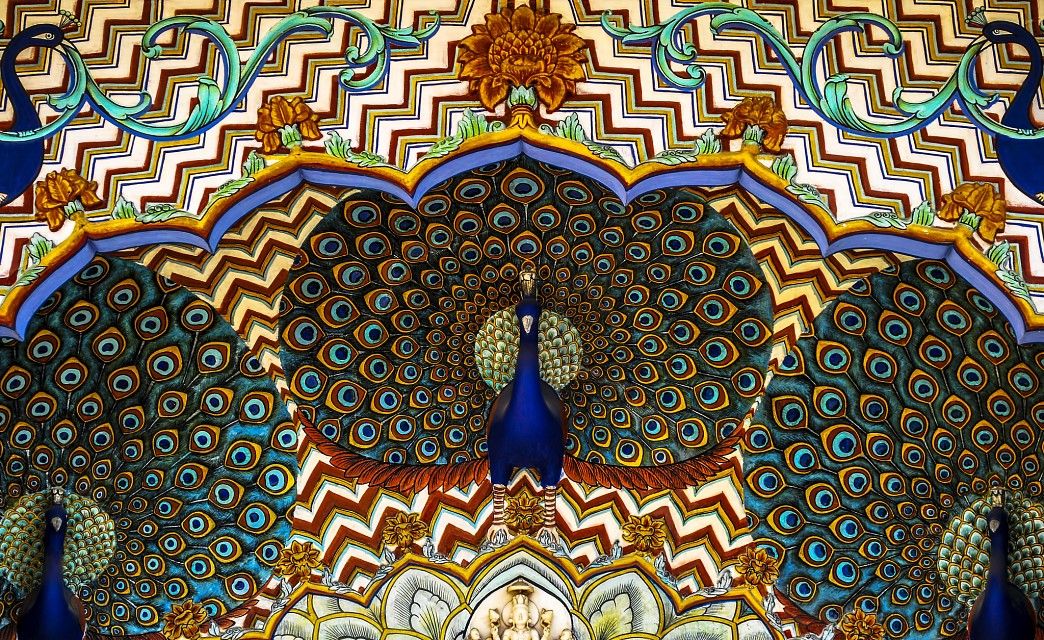
Your next stop : The City Palace where the erstwhile Royal Family still resides in a private section. A large part of the Palace however has been converted into a museum that showcases the Royal Era of Jaipur and Rajputana. The various sections of the museum house textiles, garments, weapons and armoury, artefacts and things of daily use used by the Maharajas, ancient manuscripts and carpets, a transport gallery and beautifully hand-painted but realistic portraits and paintings. The museum is not just famous for the collection but also for its architecture. The doors of various sections here symbolise different seasons. There is a Leheriya Gate, a Peacock Gate, Lotus Gate and a Shiv-Parvati gate. The City Palace also serves up some sumptuous snacks and beverages for the tired tourists in the Palace Cafe.


City Palace Pictures : From the Internet


Right in front of the City Palace is the UNESCO World Heritage site of Jantar Mantar, the observatory that houses The World’s largest Stone Sun Dial and other astronomical instruments. His highness Sawai Jai Singh Ji II, the founder of Jaipur was a scholar and a learned man with his interests in such varied subjects as astrology, astronomy and architecture and built this one of its kind marvel. Do check the time at the Sun Dial and come back amazed. After all, Jaipur must stay with you long after your visit is over!


Take a lunch break here to refuel yourself and move onto the second part of your Jaipur in a Day Tour which must be spent soaking in the beauteous and impressive architecture of The World Heritage City.

Take a tour of the Ramniwas Bagh complex at the centre of which is The Albert Hall Museum which houses collections of fine bone china, silverware, swords and hold your breath (!) An Egyptian Mummy! Another photo-opp locale Albert Hall is a favoured spot among locals for feeding pigeons. The flocks of pigeons add an interesting element to the picture compositions. The complex also has the famous Masala Chowk - a street food bonanza that comes alive every evening. 


From Albert Hall, take the route through MI road, Panch Batti Circle, Rajmandir cinema hall and reach the Statue Circle. The most beautiful road in all of Jaipur is this very road that connects Panch Batti to New Vidhansabha. Statue Circle is a mini carnival in itself every evening with ice cream and street food vendors and balloons and toy sellers all around. The New Vidhansabha building is yet another awe-inspiring architectural wonder. Aesthetically designed keeping in mind the existing architecture of Jaipur, it blends in very beautifully with the rest of the city.


If time permits, do visit the Moti Dungri Ganesh Temple and Birla Mandir before heading to Chokhi Dhani for an authentic Rajasthani dinner. The village themed restaurant is not a regular “get in - eat - leave” kind of a place but a centre that exhibits local art, culture and flavours in the truest forms. Right from the traditional welcome to the village-fair experience and the customary “manuhar” at dinner to the “Pachha Padharjo Sa” or please visit again adieu, it is an experience to be thoroughly enjoyed.


The other attractions of Jaipur include : A heritage Water Walk at Nahargarh Fort, Biological Park at Nahargarh, Kanak Vrindawan Gardens, Hathi Gaon, Sisodiya Gardens, Galta Ji, Leopard Safari at Jhalana, Heritage and Food Walks through old Pink City, Heritage Walk through Sanganer, exploring Bagru, night tour of Jaipur and many more such wonders.


Explore the heritage, culture and traditions of Jaipur with us. Click here to get a customised tour plan made just for you.


Wednesday, 19 June 2019

When in Jaipur… Part 1 - Shopping Guide


Jaipur is known World over as the city of Forts and Palaces, the city of Royalty and of course a foodies’ and shopper’s paradise. Be it the exquisite Gems and Jewellery or the handcrafted toys and artefacts - Jaipur has something for everyone. We today bring you a gist of the many lovely things that a shopper can fill their shopping bags with in Jaipur. Foodies, you need to wait for the Part 2.

To make things simpler, let’s take you on a tour from one market to another telling you all about the specialities these markets are known for. But first things first, Link Road in Bapu Bazaar is the foodies’ paradise and we too like a true blue Jaipurite start our tour from here with some Chaat and Falooda to provide us with the much needed energy to last us through the day. We will stop over for lunch at LMB, but that’s another story.

We begin our shopping trip from Bapu Bazaar itself which is one of the main and many well-designed and laid out marketplaces of the Pink City. The shops display an array of Lac Jewellery, Imitation Jewellery, Bangles in vibrant colours, Leather Mojris and Bags, Readymade garments in Tie and Dye and Hand Block Prints, Sarees and dress material - cottons and chiffons being the most popular choices, handicrafts - puppets, toys, key rings, pens, artefacts, mirror frames, etc etc., - there is so so much to see and buy in this lovely market of Jaipur. Take your leisurely time to window shop or to pick some souvenirs for yourself.


The straight lane that Bapu Bazaar is converges into a perpendicular road called Johri Bazaar which connects Sanganeri Gate and Badi Chopar. This is the most famous market for tourists and locals alike. The shops towards the Sanganeri Gate end store the secrets from the Maharajas’ Kitchens - yes! These are the spice and condiments shops and stock everything that your kitchen might need. From freshly ground regular spices to some of the exotic ones, they also keep spice mixes that come in handy when you want to try your hands at the authentic Rajasthani dishes. You may find the local ingredients and dried versions of the locally sourced vegetables too like Ker, Sangri, Kachri etc.


Next comes the chiffon and cotton paradise with the most beautiful tie-dye patterns on sarees, turbans, dupattas and dress material. Jaipur is also known for its “Gota” work and you can easily find something that you would love to add to your wardrobe here. This is the market that the brides-to-be come to for their trousseau shopping. Silver jewellery and Gem Stones jewellery shops also line this market very prominently. Approach Badi Chopar and it is no less than a Shopper’s Utopia! Hand made perfumes called Itra or Ittar, handcrafted wall decor pieces with intricate embroidery and mirror work, fabrics, bangles, handicrafts, mojris, imitation as well as real jewellery and hand block printed bedspreads - think of it and it is there! The quintessential collectible from Jaipur is the Jaipuri Razai - the featherlight cotton-filled quilts that come in Cotton and Velvet versions. This you have to definitely add to your Linen collection. 

Club your shopping with a bit of Sight seeing and go towards the JalMahal, the intervening market is the hub for carpet and GI tagged Blue Pottery shopping. You may alternatively choose to take a walk with us through the Industrial Town of Sanganer to pick up your stash of Blue Pottery, Hand Block printed textiles and Hand Made Paper. More information on the walk is available here.

While browsing through the very many shops we crossed the famous Laxmi Misthan Bhandar, to satiate the hunger pangs let us go back there for the best Ras Malai and Aloo Tikki Chaat in town. Lunch options too are galore here, but that is for a later time.

Next comes our spinal road, the road that is still unsure if it is a road (that’s us Jaipurites’ inside joke), the M I Road. One walk across the length of this road can give you a glimpse of what Jaipur is all about in just forty minutes. The buildings call for your attention for the brilliant architecture, the shops whistle out with all the lovely wares they display, the eateries whisper the names of the mouth watering dishes in your ears, the jewels and gems wink a colourful wink, the handicrafts stores wave at you and the famous Lassi shop just smiles at you, well knowing that you would end your walk with a tall glass of rose flavoured lassi.


Friday, 9 November 2018

Jaisalmer in a Day


The Golden City of Jaisalmer, the heart of the Thar Desert is an integral part of any traveller’s bucket list. If you haven’t experienced the Thar then you haven’t truly travelled is what all the travel bloggers tweet. Let us then make an attempt to quickly design a capsule trip to Jaisalmer - a city in a day.

Here you go, with our take on the tour of the city so beautiful. We will skip the day excursions to Tannot (open only for Indian nationals), War Museum near Pokharan and Kuldhara - the abandoned village. During the first trip let us just focus on the essence of Jaisalmer - the beautifully sculpted sandstone monuments and the vast expanse of the indomitable Thar desert. The museums and the monuments that we will miss visiting during the first trip will be covered in our consecutive trips as and when they happen.

Desert cities experience this peculiar phenomenon of warm days and cooler mornings and evenings. You wake up to a cool beautiful sunrise which you may choose to witness in a camp on the Sam Sand Dunes or from the roof top of one of the intricately carved boutique hotels in the city. We recommend the camp so that you may rise before the sun rises and on a camel back ride upto a point where you can witness the alluring sun emerge from the sea of sand changing the hues of the sky and the sand from peach to pink to orange to yellow to a final bright gold at which point you will need your shades to look the sun in the eye! A camel ride can really work up an appetite so once back in your camp you must dig into the scrumptious breakfast laid out for you with some hot tea or coffee to give a boost to your day’s plans.

We start our sight seeing tour a bit early, say around 07:00 am with a quick trip to the Gadisar / Gadsisar Lake. The water reservoir not only attracts tourists in large numbers but also is a halt and siesta venue for many species of birds. The man-made Lake was constructed by Maharawal Gadi Singh Ji, the first ruler of Jaisalmer and was decorated with intricately carved Temples, Chhatris, Shrines and Ghats all around. A beautiful resting place for a traveller that gave respite from the heat and thirst, the lake till date is in immaculate condition and is a hotspot for many a filmmakers and photographers.


From here we head to the world famous mansions called The Patwaon Ki Haveli. This is a cluster of five mansions which were built by five rich Jain trader brothers. The havelis have extremely minutely and intricately carved facades. The detailing is to be seen to be believed. Built in soft golden sand stone the havelis attract millions of visitors per year. There is a museum, a temple and a small craft bazaar within the enclosure of these havelis. The havelis are built too close to each other and it gets a little difficult to truly admire the carvings, keeping this in mind the Govt cleared some sections in the lane and created space to make it easier to be able to look up and take in the beauty of the magnificent Patwaon Ki Havelis. Shoppers delight are the kiosks around this area that sell skirts, pants, scarves and tee shirts in eclectic and traditional prints. But shopping has to wait because The Jain Temples in the Fort remain open till 1:00 pm only.


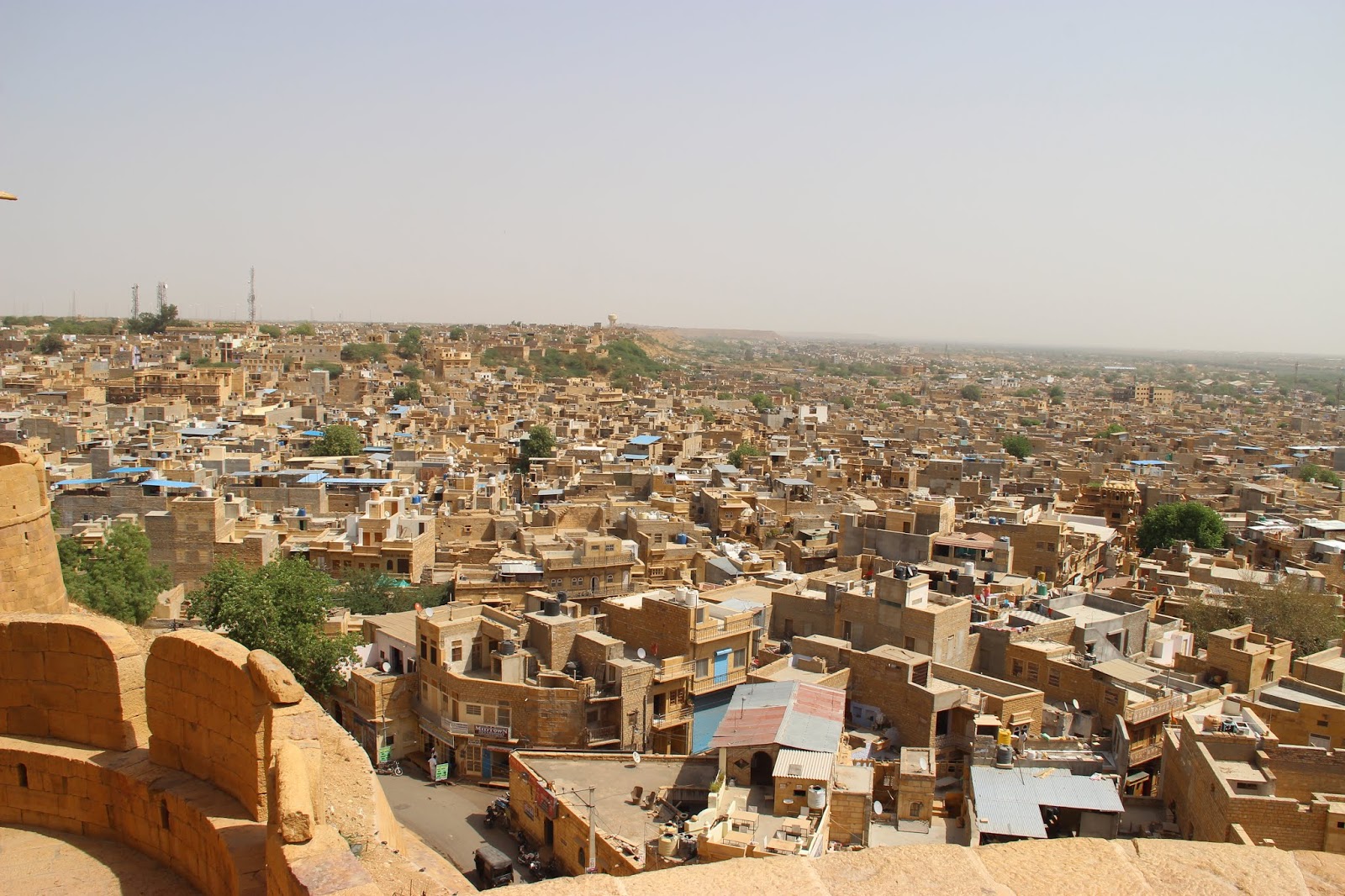
Our next stop is the World Famous Jaisalmer Fort also known as The Sonar Qila because of the Golden Glow of the sand stone that it is built of. The uniqueness of the fort is that it is still inhabited by the people of Jaisalmer making it an “alive fort”. The fort is built on the Trikuta Hill and the whole populace of Jaisalmer resided within the Fort walls in olden times. As the need for more space was felt over the years, a temple was first built outside the Fort where the present city centre lies. Around this temple was built a palace for the then Maharawal of Jaisalmer and the Palace was thus named The Mandir Palace which now is a luxurious heritage hotel. There also is a museum by the same name, a visit to which will have to wait for the next trip to Jaisalmer.


A winding pathway leads up to the Fort and the main entrance is flanked by temples - those of Baba Ramdev Ji (a deity from deserts of Rajasthan) and Ranchhod Ji (an avatar of Lord Krishna). The pathway is lined with a colourful display of handicrafts and bed spreads, statues and wearables, magnets and bags too. Our suggestion : don’t yet get distracted by the shopping so early, finish the tour and during your return spend as much time as you want scouring for the most suitable gift or a souvenir. 


The main highlights of the Fort are the Jain Temples and the cannon point where a cannon still sits overlooking the new city of Jaisalmer. The Jain Temples are made in marble, very intricately and elaborately engraved and are multiple storied. You have to leave all the leather items like your belt and wallet outside before you ascend the steps of the temples. Photography is allowed here as long as you do not disturb any of the devotees. The features that take your breath away in the temples are the eyes of the deities which are made of a very sparkly stone and looks almost real as if the God is looking at you with all the love and affection and blessings. Another is the vast temperature difference between the outside and the inside of the temple. The insides are much cooler than the outsides owing to the Marble and the architecture of the temples.


Next we walk up to the most photographed location in the fort - the cannon point. The path is all uphill getting very steep just before the cannon point. The view of the city is totally breathtaking from here. Ideal spot for a few fabulous shots. Now is the time for a leisurely walk back to where you parked your vehicle. Spend as much time as you want and take a look at the vibrant fare the shopkeepers lure you with. Silver jewellery buffs, this is the place to add a little something that looks traditional yet antique to your existing cache of silver jewellery. Brass and copper idols, statues, artefacts, camel leather bags and wallets and belts and even diaries bound in leather covers, clothes in brightest of bright colours (we love the fuchsias, oranges, pinks, reds, greens and blues in their brightest hues in Rajasthan), wooden toys and items of decoration and utility, gem stones, readymade turbans, the list is endless for you to indulge in. 


Time for a sumptuous lunch and then we head to the Kuchha homes of the natives of the Khuri Sand Dunes region. People in Rajasthan are humble and hospitable and warmly welcome tourists into their homes and their lives. We meet the potters here who will let you get a feel of the wet clay and even shape out a pot on your own. The women cover their faces in veils and will only uncover them for women guests. Lady guests can enter the homes and see the skilled women busy with their fine needlework patiently embroidering their blouses or cushion covers. The children will gather around for pictures. The people here are simple and have adapted to the harshness of summers and winters well to move their daily lives unhindered.


A small mud hut in a corner can be seen which is usually used for storing food grains and firewood. As we leave the home of the village natives and move further towards the sand dunes, we will cross some wells where we will encounter women filling water in pots which they will then balance one over the other on their heads and another one on a hip and walk all the way back to their homes in the village. The arid region faces water scarcity in the summer months and hence people here are highly conservative and careful about the water usage.


Witness the Khuri Desert - call it the younger version of the Sam Sand Dunes which are the actual Thar Desert - the unending, vast, expansive, sandy, shifting dunes, getting lost kind of the desert. The shrubbery around here is the Ker Sangri and Bor that are the dry vegetables and fruits of the region and are greatly relished.


From here you drive straight to your hotel / camp site. Enjoy the cultural show that most of the hotels arrange for their guests during dinner and sleep well after your tiring yet exciting day in the World Heritage Site of Jaisalmer.


Monday, 15 October 2018

Ahmedabad In a Day


The World Heritage City, just in a day? Possible? No, its not. But who is stopping you from taking multiple trips to this vibrant city that has heritage safely preserved in its caring palms and modernity taking it to the global platform? We will give you day-plans for all of your multiple trips. Lets start with the first one.

Arrive Ahmedabad in the evening and spend time at the Sabarmati River Front - it is more than what you can imagine. Peaceful, tranquil and the sound of water lapping up against the river bank humming a soft lullaby. Yes, it is as peaceful as can get to meditate or to catch a nap. Cool breeze and the gentle sound of water - Welcome to Gandhiji’s Ahmedabad.

Sleep well in your cozy hotel room and next morning be ready by 7 am but for a change, do not eat breakfast. You read that right, do not have breakfast. The reason is that we want you to indulge in some scrumptious Gujarati delicacies for a yummy breakfast treat but not before some much needed exercise in the form of a 2.5 kms long Heritage Walk. 

Our day begins at the Swaminarayan Temple at Kalupur. You are in the World Heritage City and if you do not explore this city on foot, wouldn’t it be an incomplete experience? Our heritage walk starts from the Swaminarayan Mandir, a detailed account of the same is given here. The hour long walk culminates at the Jama Masjid. From here we go to the hundred year old Chandravilas Restaurant - the restaurant that boasts of Gandhiji, Sardar Patel, Kishore Kumar, Amitabh Bachchan and other eminent personalities among its patrons. You saved up your appetite for the most delicious breakfast that would be served here. Fafda and Jalebi combo is a must to start with and a masala tea is a must to wash down your meal with, the in betweens can be anything from Puri Bhaji, Paranthas, Dhokla, Khaman, Sandwich or the other items listed on their menu which is rattled out at supersonic speed by the many “Chhotus” who serve here.


We now have time to either explore Jhulta Minar, Teen Darwaza, Rani Sipri Mosque onto Sarkhej Roza or another set of monuments and go to Adalaj Vav and Gandhi Ashram. Then there are the museums too , Calico museum being a must-visit place on the checklist of every traveller and The Akshardham Temple. As we said, you can not cover everything in just a day hence we divided the monuments in these sets. Let us choose to go onto Adalaj and Gandhi Ashram route today. The other monuments will feature in our next articles “Ahmedabad - again” and “Ahemdabad - yet again”. 

Step wells are an unmissable and integral part of Gujarat’s culture. These were the source of water in the semi-arid zone and also served as a cultural hub for many cultural and traditional gatherings and celebrations. Women would gather here to de-stress and have a casual chat with other friends while on their way to fetch water for their daily domestic chores. As you step inside the step well you would notice that it is much cooler inside the well as compared to the temperature outside. This temperature difference is due to the way the vav was constructed. Talk of engineering marvels!! A detailed account on the Adalaj Vav is soon coming, watch this space.

After spending some time exploring this beautifully carved wonder of a step well, we head towards the Gandhi Ashram. Raghupati Raghav Raja Ram… reverberates in the peaceful environs of the Ashram which feels more like a quaint peaceful village than a Sanctuary. Spread out across the banks of Sabarmati with Neem Trees purifying the air, this home of The Father of The Nation beckons one and all. You would see many school children beelining for the visit through the Museum. The museum showcases life and times of the Mahatma. But before you reach the museum you would notice the Ashram Shop on the left. This is a storehouse of literature about India, Her Freedom Story, Freedom Fighters, Freedom Movement, Mahatma Gandhi and many other national leaders. Handmade notebooks and diaries and miniature versions of the spinning wheel or Charkha are the best souvenirs and gifts from your visit to The Gandhi Ashram. Gandhiji’s “My experiments with truth” and his biography are the fastest selling books here and are available not just in Hindi and English but in other Indian languages too.


Moving ahead you would come across Vinoba Mira Kutir, the small cottage once inhabited by Mahatma’s greatest devotee Mira who was a foreign national but was so influenced by Mahatma Gandhi’s teachings that she decided not only to become a follower but also to re-christen herself and staying on in India for the rest of her life. Seeing her devotion towards Mahatma Gandhi she was given an Indian name and that too of Mira Bai- the ultimate devotee ever! It is known that Mahatma Gandhi would keep the most hardened criminals here, close to himself and would gradually reform them and re-introduce them to the society. 


Overlooking the Sabarmati is Mahatma’s living quarters - The Hridaykunj. A small tour of the insides of this beautiful abode is a must. See the humble home and kitchen of the Greatest Man who ever lived and sit in the verandah outside to soak up the surroundings which are home to many birds and squirrels. Parrots squaking around and soft murmur of speedboats taking people on joyrides on the Sabarmati are the only sounds that would interrupt your thoughts.

You can leave The Gandhi Ashram but a visit to The Gandhi Ashram will never leave you - a memory and an impression to last a lifetime.

We are on the other side of the noon and its time to grab a bite. You could sit at one of the popular places or a fine dine depending upon how much time you wish to allocate to your meals. Post meals, we always recommend a slow leisurely walk through the city markets exploring the many lovely handicrafts and fabrics that are showcased in the vibrant bazaars. Savour your evening tea before heading to the The Law Garden or Manek Chowk for a mouth watering and most eclectic street food fare. Both these places rank high and its difficult to choose one over the other but we crossed Manek Chowk on our heritage walk so lets go to Law Garden now. Here you could also indulge in some shopping of traditional Gujarati Chaniya Cholis and imitation jewellery, the kinds that swirl and twirl all over the World during the nine days of Dandiya during the Kartik Navratri. To wind it all up do stuff a meetha paan in your mouth - it will give you a few quiet moments while you struggle to contain the juicy paan in the confines of your mouth and discover its many layers of flavours!

Start with jalebi and end with a paan - that’s your perfectly sweet day in Aapno Amdavad!