Followers

Showing posts with label Village. Show all posts

Friday, 7 October 2022

Rann Utsav - All you want to know


Rann Utsav welcomes you


Every year nature presents a clean white crisp canvas and invites the artists to use their wild imagination to colour it in the most vibrant shades. The canvas is the vast expanse of the Great White Rann of Kutch and the artists, us!


Rann Utsav is an amalgamation of everything cultural, energetic, rustic and charming. A festival that celebrates life and colour. People throng the Rann of Kutch in large numbers each year when the monsoons have receded leaving behind a crusty layer of salt covering the entire land of Rann. The salt is so pure and white that it glistens in the moonlight. A full moon night experience at the Rann gives an illusion of one being inside a snow globe. Magical, to say the least.


When does the Utsav happen?

Just when the Weather Gods bless the land of the dry Rann with an abundance of water to let the salt come up and form a crust and just when the Sun God decides to be kinder to the open land. In other words, the time is post-monsoons and through the entire winter season. The Utsav starts near Diwali time in October and is on till winters last i.e., February of the subsequent year.

What is the hullabaloo all about?

A travel experience like none other! Staying in a tent in a temporarily created village. Experiencing the essence of Gujarat in just a couple of days. A tent stay yet luxurious. A complete holiday experience with adventure, luxury, cuisine, shopping, sightseeing; all aspects are taken care of. Authentic flavours of Gujarat and from other parts of the country too prepared by chefs with a five-star experience. Folk dances and arts keep you enthralled. And when you are just too tired to walk back to your tent, a buggy ride through your make-believe village to your little hut/tent.

Need we add more?


How long must one stay there?

A two-night stay is definitely a must to be able to explore the regalia that Rann Utsav is. After these two fun-filled enriching days, you might get tempted to extend your stay by a couple of days more. The days at Rann Utsav are busy, very busy with action all around, evenings are engaging and entertaining and the dusk enhances the magic of the white desert. A wholesome experience can only be had over a couple of days.


Dhamaal - The Siddi Tribal dance


What can one do at the Rann Utsav?


1. First and most cherishable is the stay in a tent, rather a tent city. You have a neighbourhood which also stays in tents, now is that not exciting enough? Tents that are equipped with all the luxuries of a hotel room, beds, electricity, air-conditioning, tea-coffee maker, amenities and a spic n span washroom too.

2. Gujarat is known for its various arts and crafts. Visit the craft bazaar and interact with the artisans directly. Pick what fancies you. Home decor, accessories, home furnishings and pottery are among the most popular products here.

3. Utsav, mela and fair are synonymous with joyrides. Here too there are many rides available - big or small, fast or slow, high or low, take your pick and enjoy the ride. Past Rann Utsavs have seen para-sailing, ziplining as popular activities.

4. Gujarati cuisine is very popular world over. Who doesn’t prefer carrying methi theplas for a road trip? Indulge in the authentic Kutchi flavours cooked in pure desi ghee with the most aromatic freshly-grounded spices. A Gujarati thali is a must-have when at the Rann Utsav.

5. Close to the venue of Rann Utsav are the culturally rich and very famous villages of the Banni Grasslands. Visit these villages during the day and interact with the villagers who also are skilled herdsmen (goats, sheep, cows, buffaloes, camels too) and craftsmen and create wonders in needlework, lacquer, wood, leather etc. Meet the villagers and visit their workshops, learn a stitch to two too! And do not forget to taste the fresh and sweet Mavo at Bhirandiyara and Kutchi dabeli along the way.

6. Kutch must be visited during the full-moon phase though other days too are equally enchanting. But the charm of a full moon night in the white desert definitely stands out. The snow globe experience as you stand on the crusty white salty earth of the Rann and are engulfed by the pearly white light of the moon reflected by the shining salt crystals. This is the most serene and surreal experience that one can get at the Rann Utsav.

7. Mention of the desert brings the thought of camels instantly, they are in an eternal relationship with each other. Camels can navigate large expanses of deserts with ease, be it the sandy desert of The Thar or the salt-crust desert of the Rann of Kutch, camels can be seen loitering around on the deserts, sometimes taking a passenger for a joyride and sometimes just like that without any purpose.

8. Gujarat holds the distinction of having the longest dance festival in the world - Dandiya / Garba lasts full 10 days! There are other dance forms too from Gujarat that are famous for their history and style. Siddi tribe from the jungles of Sasan Gir perform a vitality-infusing Dhamaal dance, do not miss their live performance. They originally hail from Africa, but have settled in Gujarat for long.


What’s more, you also get a sightseeing tour of other attractions of Kutch on the last day of your stay at The Rann Utsav. While you carry on with an engaging tour which takes you to the villages, the local artisans’ homes, the many museums and other attractions, do not forget to get down from your ride and take a picture at the Tropic of Cancer which cuts across the road that connects Dhordo to Bhuj. There is a magnetic field too along the way where if left in neutral, the car moves slightly backwards.

The bazaar at the Utsav


How to reach?


Bhuj is your nearest railway station as well as the airport. If you are booked to stay at the Rann Utsav, their pickup buses will meet you outside the railway station / airport. Similarly, you will also get a drop to the railway station / airport on the day you check-out.


Rann Utsav can easily be called a tour of all of cultural Gujarat in just a couple of days. For other destinations, monuments, wildlife parks, pilgrimages and other attractions though one needs to take a tour of the state. There is so much that one can see and explore in Gujarat. Truly a vibrant state.




Saturday, 15 May 2021

Concealed Underground library - Largest in Asia


Villages after villages blur past as we make way to the temple of the Kuldevi of the Bhati Rajputs - Shri Bhadariya Rai Mata Ji. The temple sees thousands of visitors each day, all the year-round. Newly wedded couples who come to seek blessings from the Goddess for a blissful matrimonial life can be seen in large numbers. In the middle of the Thar, this temple and its surroundings are truly an Oasis of relief, respite, faith, love and knowledge.

A newly wedded couple seeking the blessings of Shri Bhadariya Rai Mata ji


Knowledge- We are talking about a library that houses more than 900,000 books, and is sixteen feet under the ground, and is the largest library in Asia! Owing to its design and construction, with no air-conditioning inside, the library remains significantly cooler than the environs outside. The holding capacity of the library is an astounding 5000 people at the same time!


Brief History


Sant Shri Harivansh Singh Nirmal, fondly known as Nirmal Baba or Bhadariya Maharaj, came to this small village in Jaisalmer district of Rajasthan some seven-eight decades ago. Little is known about him and his life prior to his coming to Bhadariya Ji. He was an avid reader and was fond of collecting books. He believed that the greatest God / Goddess of all is “Knowledge” and with that thought in mind, he envisioned a library that would house every printed book on every research-worthy subject. And thus was born the idea of creating this library. 


Another notable contribution of Nirmal Baba is the Gaushala (cowshed) at Bhadariya Ji. Babaji, a believer of Gau-seva would leave no stone unturned to save the indigenous Indian Cow from the abattoirs and butcheries across the then porous international border. He even bought these cows from the tribals who felt they could make more money by selling the cows to those who found a dead cow more useful than a living one. Thus came the gaushala into existence. From those few cows now the Gaushala is spread over 1 lakh bighas (1 bigha in Rajasthan equals 27,225 sq ft) of land. Run on the donations received from devotees, the Gaushala tends to more than 45,000 bovines. And yes, this is one of the largest Gaushalas in the country.


The library


Spread over acres and acres of land, oops(!) correction, spread under acres and acres of land, the access to the library is through a humble but wide stairway. Once inside, you are greeted by rows and rows of neatly arranged books in glass-covered cabinets, 562 to be precise. The shelves reach up to the ceiling, with the top ones still empty and awaiting the arrival of more books. Maharaj ji’s ambition was to have a copy of every printed book on every subject here in this library. The library is a treasure trove for book lovers, bibliophiles and research scholars. Rare manuscripts and scrolls are also painstakingly preserved and given a place of their own. The treasure here holds books on varied subjects including literature in many languages, science, history, politics, world religions (literature and religious books of 7 out of a total of 11 major religions of the world), geography, philosophy and even dictionaries and atlases. One can even find the original unedited copies of the holy books here. The ones we buy from the market are usually translations and concise copies. 


There is a restoration room as well, where the book-doctors mend and tape the tatters and tears if any and re-write where an ageing book requires a little assistance with the blurred words. They come in old and worn-out and leave fresh, crisp and securely bound :)


Comfortable and easy to navigate and explore, the library as I mentioned earlier, remains cool all through the year. Long corridors have huge mirror walls at the ends, giving an illusion of them being infinitely never-ending.


How to reach


By road, it takes barely an hour and a half to reach Bhadariya from Jaisalmer (79 km). Jodhpur too isn’t very far, at just around 220 km (close to 3 hours). And both these cities are well connected by air, rail and roads.


Once here


We began with Bhadariya Rai Mata Ji’s Darshan. Next, we visited the temple dedicated to Nirmal Baba and the museum that gives a glimpse into his personal life through carefully preserved articles and belongings of Maharaj Ji. Besides his personal articles of daily use, the museum also has his collection of currency (coins and currency notes) and stamps. 


Done with the temples and the museum, we returned to the office of the trust near the main entrance. A lassi Prasad at the office is a must-have. Keep the appetite for a tall glass! Having given permission by the office, we were escorted by one of the attendants into the library. We spent a leisurely time there scanning through shelves upon shelves of the invaluable treasure of knowledge. Our guide shared anecdotes and further information about Maharaj Ji with us while patiently taking us around the library.


When planning a visit


The library is yet to be formally inaugurated and is also awaiting the addition of very many books hence visiting without prior permission might turn out to be a futile effort. It is suggested that you reach out to the temple trust under whose management the library falls, and seek an appointment before taking that journey through the picturesque golden landscapes of rural Rajasthan.  You may either drop an email to them or seek an appointment telephonically. The library sees an average of 60,000 scholars from around the globe each year.


A bibliophile’s paradise, a book lover’s utopia, and to all the others a wonder to be visited. Include a quick trip to Bhadariya Ji during your next quest of Rajasthan, and be mesmerised by another “Jaane Kya Dikh Jaaye” wonder!

Saturday, 15 December 2018

Hidden Gems of Gujarat : Dholavira


The surreal experience

The allure of a full moon night at the great Rann of Kutch has attracted many a tourists, photographers and even locals month after month year on year. The experience is definitely unmatched. The silver sky above and a snowy land beneath! But the experience we got at Dholavira was like none other. One, we were all by ourselves with no one, absolutely no one around to break the continuity of the snow globe we were floating inside. The occupants of just one car and the moon and the white desert! Two, it was a full moon night obviously and was pretty late in the night with the moon almost being overhead.


The drive

Dholavira now ranks on top of our favourite destinations and we are sure to visit this magnetic wilderness again and again. The long drive to the resort where we were booked to stay seemed like a never-ending trail. The sun had already set and there weren’t many vehicles to give us company on the 100 odd km long stretch to Dholavira from the closest city of Rapar. An odd blue bull somewhere, a stray camel, eagles ominously hovering above us as if signalling to their own about the arrival of life from somewhere far away, a single road lined with thorny bushes with absolutely no sign of inhabitation around it and us in our white tourist vehicle with an enthusiastic driver to keep us amused. To be a little honest here, there was a little apprehension somewhere deep inside with all this atmosphere around us. But wait till you read about our experience at the resort.


We moved on with google maps of course ; though it wasn’t needed as there was only one road to take us to our destination. Nonetheless, we city dwellers like to know where we are heading so we kept our map on. The map showed a large expanse of “blue” on our way with our road cutting across it. Google map “blue” is normally a water body and we wondered as to what were we about to cross to reach our destination. To add to that anxiety, our destination is called Khadir Bet where Bet means an island!


Anxiety levels rising with the moon we reach the “blue” which looked “black” and just as we entered the zone it magically turned from grey to silver. This sight compelled us to stop and soak in this so so amazingly surreal realm. The “blue” turned out to be the white Rann of Kutch. The pristine white, not trampled upon by human feet, cool November breeze and this magical sight, we wanted to camp there for the night! But the anxiety soon returned and we felt it best to reach our resort on time. 

After the “blue” stretch got over, we entered a village which too was eerily silent with no one around to even ask for directions. People in rural India and especially in such remote villages wind up early and truly follow “early to bed and early to rise” principle. Some BSF signages and a couple of boards mentioning our resort’s name gave us a sigh of relief. We were headed in the right direction!


A different kind on check in


Tea on my mind, some turns later we entered the massive entry gates of the Dholavira Tourism Resort. We parked outside a round hut which looked more like a villager’s humble abode than a reception of a resort. Two lady travellers in the white tourist vehicle exchanged glances and wondered if they should actually step out and stay in this place which was in the middle of nowhere with just a few men hanging around and a couple of yellow-light bulbs winking away at them. On top of that, our name did not even feature in the resort’s arrival list for the day! But going back meant hundred km on the same route with no one around, and we weren’t sure if Rapar had any decent places to stay too. Shaky confidence on our tired faces, we stepped out to a very warm welcome from a gentleman who we later found out was the owner of the resort. Tea was immediately served, without even asking for it. And our names were quickly written in blue ball point ink in an “arrival register”. Since our names weren’t there, we knew the advance against our stay was also held up somewhere in the technical glitches. No cash on us, no internet connectivity here, no ATMs, no Banks around. What a situation to be in! But Mahendra Singh Ji did not even bat an eyelid before checking us in and handing over the keys to a beautiful Bhunga. 


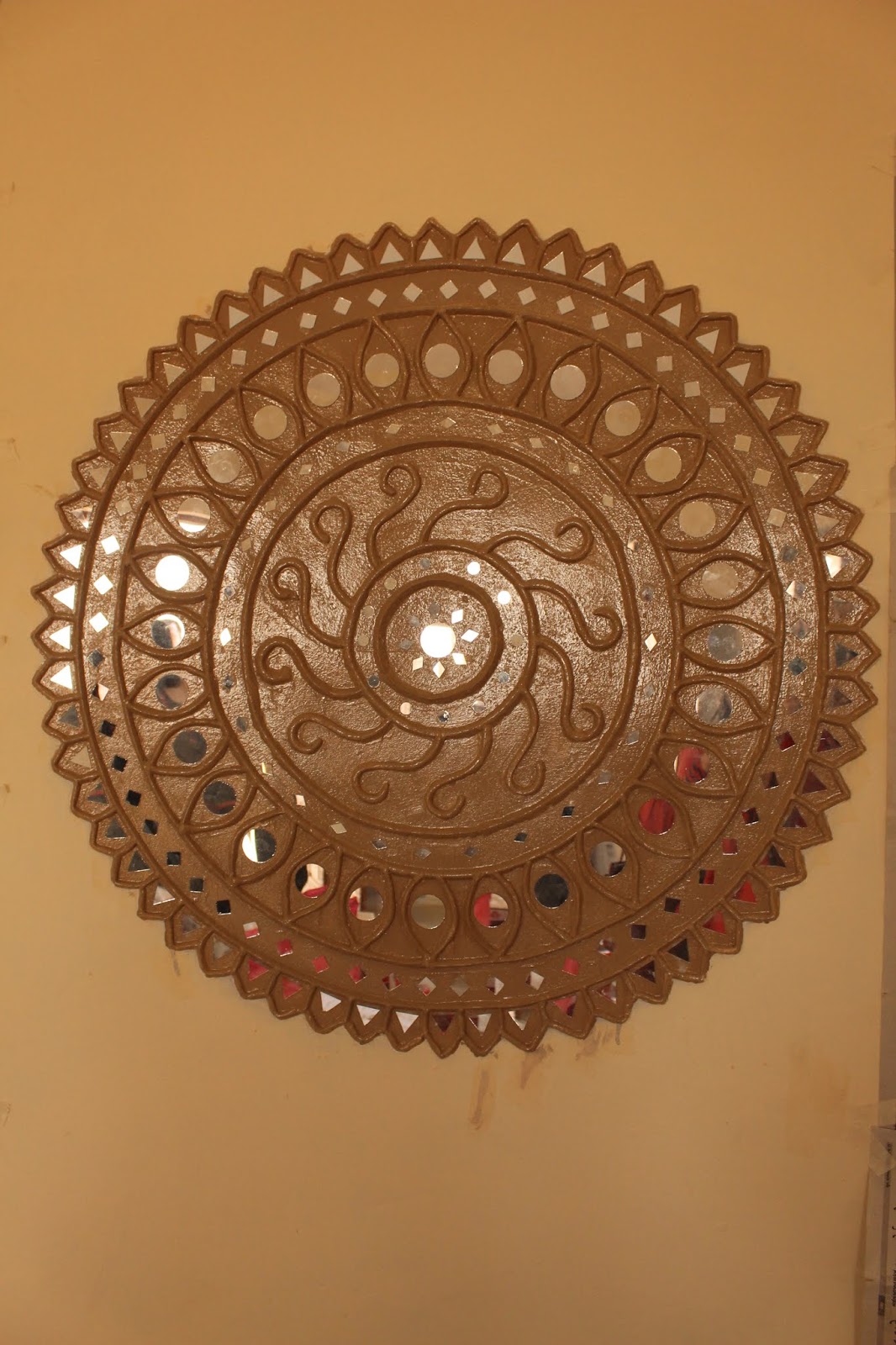
We were shown to our Bhunga, and what a lovely walk that was under the moonlit sky. We freshened up and with our hands and faces washed the anxieties away too. Dinner was served in the same Bhunga as the reception, a home style Gujarati thali. A couple of canine friends to escort us back to our Bhunga and believe us we slept so peacefully and absolutely stress free that night in our mud and mirror decorated round hut.


Exploring Dholavira


Enrapturing sunrise the next morning, cool breeze laden with unpolluted oxygen and I walked up to the reception to ask for some morning tea. The best tea that I had in all of Gujarat was served that morning. A home cooked breakfast later we left for our sightseeing tour. The resort package comes with sightseeing included in it. Sightseeing in Dholavira includes visiting the excavated Harappan site, the museum, Wood Fossil Park, The signs of presence of sea long long ago, the white desert and the Dutt Temple. First stop obviously was the Harappan site.


The Indus Valley civilisation was way more ahead of their times than what we imagine it to be, is evident from the excavations here. A detailed account of this historical wonder will soon appear on our blog page.


I was a bit under the weather due to so much of exhaustion of travelling (We were trying to cover 4000 kms of Gujarat in just ten days) so decided to take a very quick look at the site and head back but the guide who went with me was such a knowledgable story teller that I spent close to an hour and a half understanding each and every feature of the place. Museum is a treasure house of the items of daily use and artefacts unearthed from the site. 


A little drive later one reaches the Wood Fossil Park where fossilised tree trunks can be seen clasped between rocks. The rock formations clearly show signs of presence of the ocean in this land many centuries ago. The pitted rocks also have some sea fossils and variegated layers of different coloured minerals. Our guide showed us a few sea fossils back in the resort.


Walk down the rocks and you can step onto the white of the white desert. The white is all a crust of salt, the salt that we know as NaCl, our common salt and locals added it to their meals before the urbanised world told them about refined, iodine salt. We walked a few meters into the desert with the white crust crunching under our feet. This was that kind of an experience where one must connect with the elements around and feel ONE with the universe. The crust so white and reflecting the sun’s brilliance that we city dwellers would hide our delicate eyes behind the sun glasses. My pictures look as if I have clicked a white sheet of paper. Being a true blue tourist I cheekily picked a few salt crystals to carry away as souvenirs. 


Next stop was the Dutt Temple. The international border is barely 45 kms from here. People of Dholavira have relatives living on the other side of the International Borders. There is a BSF post also here where one needs to seek permission from for venturing out into the white desert towards the small yet prominent hill locally referred to as “Bhunjdo Dungar”. It was on this hill that the saint Duttatreya meditated and hence in his reverence a temple was built on the mainland closest to the hill. The hill stands surrounded by the white desert. A few peaceful moments here and we head back to our resort. 


Bidding adieu

A cup of the “best tea” was an absolute essential before setting off on our long journey to Bhuj. Thankfully, our technical issues got resolved and the money too was transferred to the resort’s account but Mahendra Singh Ji assured us that he wouldn’t have stopped us from checking out even if the money did not come. What a gesture! He also informed us that the population in this part of the country was scarce and villagers knew each other well. All his guests who are on the “arrival list” are informed well in advance about the route, the wilderness and also that in case they get stuck somewhere help would reach them immediately. With those reassurances there isn’t any room for any anxiety I guess. But then, all unforgettable experiences have been made with being on the edge of the seats, right?


Friday, 10 August 2018

Exploring the Countryside : Village Safari in Jodhpur, Rajasthan

“India lives in its villages”, said Mahatma Gandhi. And rightly so, untouched by the jet setting world and the stress of urban living, Indian villages are a haven of peace and tranquility. The life is simple and all the needs are met at the local level itself. A village safari is the best way to get a glimpse into the humble lives of the villagers of India. A brief account of what to expect during your Village Safari near Jodhpur is given here as a short guide to your trip. 

Village safaris are conducted both during the morning and the evening hours. A well conducted safari takes around 3-4 hours depending upon the time the guests spend soaking in and absorbing the wondrous countryside. To keep the rural life undisturbed by urban and touristic movement there are pre-decided pathways that the safari guides take. Though one is free to explore further into the villages but it sure would disturb the routine life of the inhabitants.

We take you through the morning safari as this one gives more chances of seeing and experiencing the true countryside life. After a hearty breakfast you must leave by 8-8:30 am for the 75-80 kms loop the village safari traverses.


If the season favours you might be greeted by a dancing peacock as you enter the villages near Jodhpur Municipal Limits. The many birds and animals that you would encounter and meet during this trip will include the domesticated cows, buffaloes, goat and sheep and the free roamers like peacocks, camels, bluebulls (Nilgai), deer - chital / chinkara and lucky few can also spot the endangered black bucks, mongoose, partridges, mynas, lapwings, jungle wabblers, quails, monster lizards and many more. Keep your cameras ready to click away the many wonders of the rural life.

We drive through the main marketplace which is lined by shops that sell everyday essentials and farm needs and equipment. This place is buzzing with activity during the mornings as the farmers bring their produce here to sell. People throng the market for the freshly plucked vegetables and fruits buying them straight from the farmers. The farmers bring their produce in wagons and set shop at the back of the very same wagons, no permanent infrastructure needed. The vegetables are absolutely freshly picked from the farms and sold at a reasonable price - perfect recipe for a happy cultivator and a happier consumer! Same set up goes for milk as well, right from the cows / buffaloes and straight to the consumers - no heavy expense on transportation and no fee to the middlemen. People in villages do not believe in buying the groceries for weeks and storing in the refrigerators. They buy their freshies every morning and consume them during the day. 

A local snack called Kachori is served hot in a small shop in this market. A quick stop for a snack and tea if it pleases you and you then are taken to the Potter’s home. 


The potters’ main products are the earthen pitchers that are widely used in India for storing drinking water. The clay, which is normally sourced from river beds is kneaded  and mixed with sawdust and then on a potters wheel is shaped into a matka (the pot), dried and then baked. While baking the saw dust burns away leaving the pot porous. These tiny pores help keep the pot moist and the stored water cool. How scientific is that and coming from uneducated potters! The potters have lately ventured into clay artefacts as well. There are a lot of decorative items, small and large pots and pans, wind chimes, lamps and paperweights that you can see at the workshop in a potter’s home. To give the guests a firsthand experience, the potters keep some ready clay for the guests to throw in a bowl or a tumbler. You may try your hands at creating one and carrying it away as a souvenir. 


Moving on, you would encounter a few shepherds grazing their herds. A little chat with them will give you an insight into their lives, a photo to remember them by and we come upon a camp of the nomadic snake charmers’ tribe. These tribals are mainly snake charmers and skilled dancers who perform their famous dance “kaalbeliya” (also the name of their tribe) in evenings at various resorts and cultural activities centres. During the days they keep themselves occupied with chiselling grinding stones and wheels, tending cattle and farms for the landlords around the area and preparing for their next performance. Caution here before you decide to enter their campsite. Let the guide take permission from their leader before you interact with them. They might not appreciate any breach of their privacy.


Division of labour is equal in villages and men and women share responsibilities, be it grazing the cattle, working in the fields, fetching water or even cooking. Keep looking out the car windows lest you miss some interesting spectacle of village life. Now we reach our next stop which is the home of a humble native villager. The house is right next to the farms and our host is happy to take you into the farms and explain about the crops that he has sown or getting the farm ready for. There is a small shed near the farm where he keeps his cows and buffaloes. The cattle is treated with very high care as the people’s livelihood and day to day life depend on them. The cattle dung is used for making dung cakes which are used as cooking fuel. Whatever the argument might be from an urban citizen, the villagers believe that the smoke emanating from this fuel keeps their homes disinfected, sterilised and free from flies and bugs. Other interesting things of their everyday use that you will see here are - the stove, the metal cover for milk, mud huts used as storage for grains and kitchen, neatly stacked dried cow dung cakes and utensils. Our farmer family is a very gracious host and offer tea to the visitors with some chit chat about their daily life. Suit yourself to indulge in these rustic pleasures.


The openness of space in villages vis a vis the cities is quite a sight to take in. As we head towards our next stop, we cross this beautiful natural pond which is a hangout for many birds and cattle. The rain water is stored here for use in the later months post monsoons. The water lasts around six-eight months. You can take a short picnic stopover here and munch onto some sandwiches or chips. Cows drinking water at the pond, peacocks all around, partridges, doves, pigeons pecking at the millets offered by the villagers, sounds of the bells around the cows’ necks, some moos from the cows and screams of the peacocks, soft hum of a tubewell running in a distance - this is your picnic music. 
Next we walk along and reach a shrine dedicated to the local deities of Mamaji and Bhomiyaji. People invite the deities to the weddings in their families, usually the first invitation card is addressed to them and left at the shrine. These horse mounted deities are highly revered in these villages and have followers from across faiths.


We now reach the clean quaint cottage of Roopraj Durry Udyog. A small family run unit, they are weavers of the famous Salawas Durries. They also are farmers and have made this beautiful workshop and home in a corner of their farms. Here you get to see how these durries are woven on a loom. They create numerous traditional and modern patterns on these durries, can even customise the patterns for you if you give them a print/ picture of the pattern of your choice. The prices here would definitely be lower than the showrooms in big cities. The family is exceptionally hospitable and lets you sit around and watch while they are at work. How the plain white threads are stretched on the loom (tana) and the coloured threads woven in between the stretched threads (bana), is patiently explained by the artisans. The hatthas (or handles) that hold the stretched threads are then shifted to exchange their positions and again the coloured thread is passed through them. This is an ongoing process and requires an eye for detail and lot of patience. The woven threads are pushed tight into the stretched threads to ensure the final product is tightly woven with no gaps in between. A very simple tool called the comb, it even looks like one, is used for pushing the threads back. And Lo and Behold! A very pretty durry is ready for the next step of beading or tying the loose ends into tassles. Two medium sized durries can be made on a singe loom at a time. Small runners can go upto three - four in number at the same time, on the same loom. Such pretty patterns and such lively colours that you wish to pick up all of the ready ones available at the workshop. More than the experience of closely watching a durry in making, it is the quiet place and ever smiling artisans that steal your heart away. Tea and snacks are offered from a tiny little kitchen that is run in a mud hut. What a full stop to your village safari, or must we say an exclamation mark?!


You now head back to the city carrying these wonderful experiences with you. Through the many farmlands stretched over acres and acres of land with one single road cutting right across, you get your chance meetings with the wildlife of the region. A herd of deer can be spotted somewhere galloping along, a stray camel happily munching the leaves of the local Khejri tree, an odd bluebull giving you a curious glance, a carefree peacock dancing to woo his mate, some hares and mongoose crossing your path swiftly in a blink and you miss moment, a shepherd and his Indie Dog disciplining their herd, many wondrous sights to keep you totally on the lookout lest you miss something. As the road enters the village near the highway, you would see men of all ages sitting casually and chatting on a platform around an old neem or peepul tree. But wait, the safari isn’t over yet. You might get lucky to meet some more tribals on your way out of the village. Gadiya Lohars this time. The nomadic blacksmiths from Rajasthan. They travel from place to place, camping for a few months somewhere and moving on again. This tribe always had bullock carts as their means of transport but with changing times they have graduated to tempos whilst keeping their tradition of being nomads alive.
The village safari experience is recommended for all tourists - Indians or Foreigners as here you get to see the real India - up close and personal! Click here to book your safari with us with an expert guide.