Followers

Thursday, 7 February 2019

Hidden gems of Gujarat : Balasinor


Exploring Gujarat


Gujarat does not cease to surprise ever. Having explored the seas, the forests, the deserts, the barren expanses, the tribal life, the arts and crafts, the cuisine, nature’s gifts, mountains, rivers, markets, cultural diversity, monuments, excavated ancient cities : do we have anything left that is yet to be explored? What if we told you that you haven’t yet visited the Jurassic World of Gujarat? Would you believe that there is a treasure trove of dinosaur fossils right inside the heart of Gujarat? And that the fossils excavated here are of Rajasauras and Rahiolisaurus as well as the long necked Titanosaurs - the giants from the Dino world? A visit to the Balasinor Fossil Park will leave you completely spellbound. You have to see it to believe it, the dinosaur bones are all right there for everyone to see! And as surprising as it may sound but Balasinor is the 3rd largest Dinosaur fossil park and 2nd largest Dinosaur hatchery in the world!!


Jurassic Traces in India

Dinosaur fossil sites in India are found in the Narmada valley across Madhya Pradesh, Rajasthan and Gujarat. Millions of years ago the Narmada nurtured what today is a dinosaur graveyard as geologists like to refer to it as. Thousands and thousands of dinosaurs lived, bred and thrived here. A natural calamity caused their sudden extinction. The theories are many and you need to have a great storyteller in a guide to make the most of your visit to Balasinor. Write in to us if you want to hear the stories from the lady who worked tirelessly day in and day out to bring the Dinosaurs of Balasinor out there in the open for all to see and housed them in a thoughtfully curated Dinosaur Museum. Princess Aaliya Sultana Babi of the erstwhile ruling family of Balasinor has been pivotal in getting the excavated site it's due. We shall be happy to arrange your personal tête-à-tête with her.


First Glimpses

Make it an exciting trip and feel the rustic rural countryside on your way to Balasinor. Through the rural belt of central Gujarat crossing many small and big hamlets and settlements, finally taking a narrow snaking road through Balasinor and Rahioli to reach the Balasinor Dinosaur Fossil Park. The first sight that meets the eye is a museum complex on the main road itself where a dinosaur sculpture greets the visitors. The museum has opened its doors to visitors and takes a break only on Mondays for the necessary upkeep. Housed here is a collection of fossils and literature about the Rajasaurus narmadensis and Rahiolisaurus gujaratensis. It also has information and pictures of the dinosaurs from India as well as the world. There is a kids section that teaches all about Dinosaurs in a very interactive and fun way with visuals, 3D imagings and games.


A brief History

Dinosaur fossils were first discovered from Rahioli- Balasinor area by Mr.Dwivedi and Mr.Mohabey in 1983 during the course of systematic geological mapping. Mr.Mohabey also found the first dinosaur eggs from this area from a cement factory’s quarry. Later, Mr.Suresh Shrivastava, as team leader with Geological Survey of India was assigned the task to excavate the fossils. Soon, more palaeontologists and geologists descended on the land and confirmed that this probably is the largest reserve of dinosaur fossils in India. Work to unearth the fossils and carbon date them to know more about the discovery began in 1981 and was carried out in intervals till 1999. Geologists and palaeontologists from over fourteen countries partook in excavations and carbon dating and assembling the fossilised skeletons of dinosaurs found here.
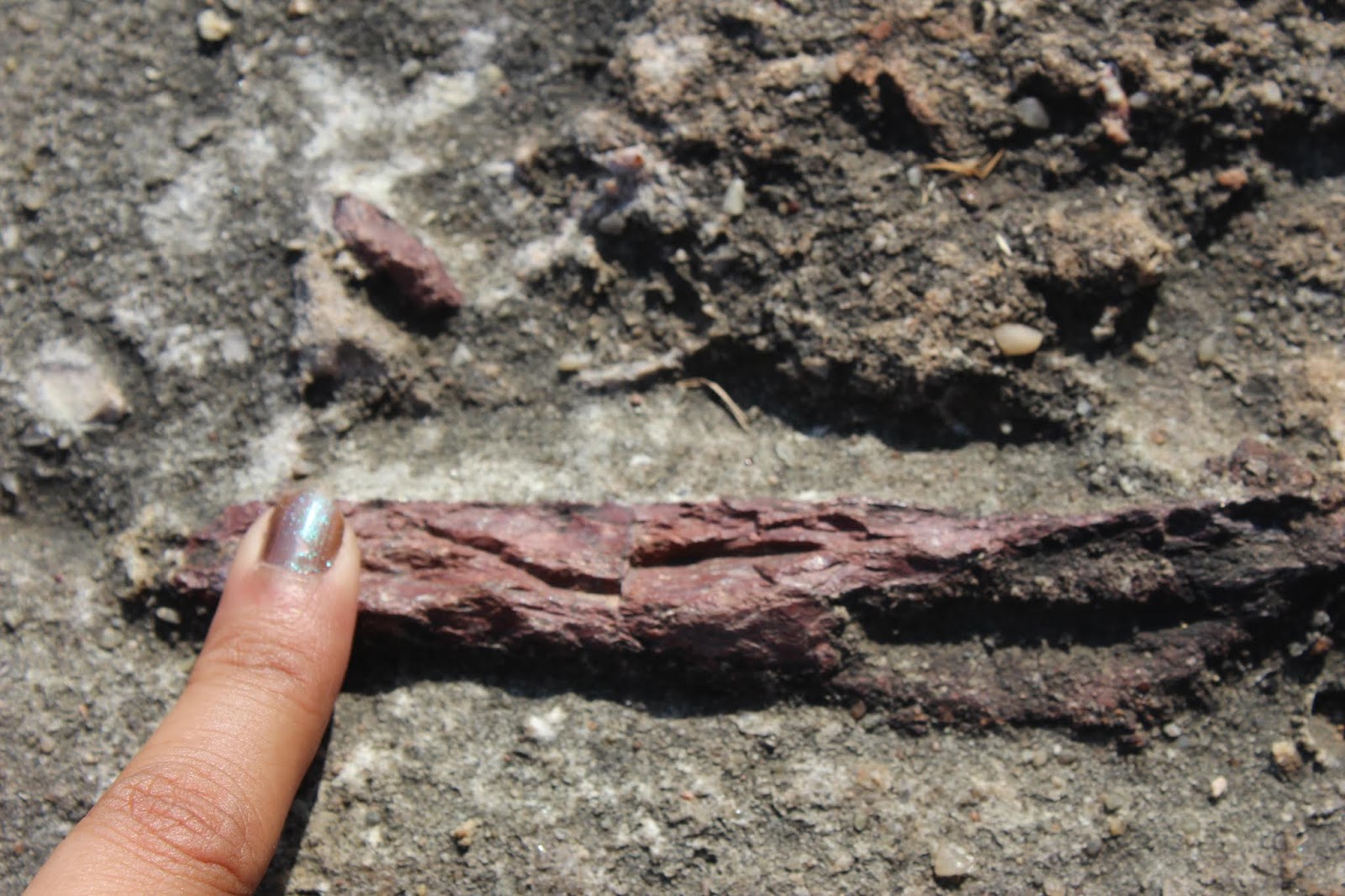


Radio metric carbon dating revealed that the fossils were at least 65.5 million years old and that not just one or two but thousands of dinosaurs are buried here. The fossils are from the late Cretaceous age. The site probably was a nesting ground for dinos as many fossilised eggs huddled in nests are found here. The forest department, Govt. of Gujarat has carefully erected enclosures around the major rocks that contain visible fossils. Walk around these enclosures with a knowledgable guide who with a stick points out the features of the fossils. You can spot a femur, pelvic bones, a knee, cranial cavity, a spine and other unidentified bones.


Extinction Theory

How did the world of dinosaurs suddenly disappear? The theory behind this is that due to an impact of an asteroid hitting the earth, and the repercussions following the impact like climate changes, acid rains, water bodies getting contaminated etc and rising of the dust and heat choking the entire stretch of land, made it impossible for the flora and fauna to survive in those given conditions.


The Fossils

Lots of fossils collected from this park are on display at the museums in Kolkata and Jaipur where the Geological Survey of India has its research centres. As many as approx. 400 bones were discovered by opening seven pits which contained bones of both herbivores and carnivores. More bones were of the herbivores while few were of carnivores but the carnivore bones were more interesting as they found a brain case with jaw and many teeth and a horn and on the basis of these bones they were able to reconstruct a nearly complete skull of a dinosaur not found anywhere in the whole world except for India and in 2003 they announced to the world a new species of dinosaurs calling it the Rajasaurus narmadensis! It measured 30 feet in length (9 meters), height was 2.4 meters and weighed approx. 4000 kgs!! Yes, we are talking about the largest life form that ever walked this planet! They lived in the late Cretaceous period of the Mesozoic era. As many as 75 bones from a single skeleton have been found here. The fossil park is 3rd largest dinosaur fossil park and second largest hatchery / nesting area of dinosaurs in the world! The fossil park is spread over 52 hectares of forest land and is guarded day and night. 


Let's visit

Balasinor Dinosaur Fossil Park is an ideal place to visit during your next vacations. Take young and old, everyone with you. Start with the museum where the installations include 3D Projection Mapping, 360 Degree Virtual Reality, 3D Stereoscopic Projections, Interactive Kiosks and a Vivid Display of Triassic, Jurassic and Cretaceous times. Get your pictures clicked with the Life-size sculpture of Rajasaurus Naramadensis, the King of Dinosaurs and go explore the vast Fossil Park. So much of fossilised treasure lays buried here that you don’t have to go looking for it, it is all around you, right under your feet.


Getting there

Closest cities are Ahmedabad (100 kms), Vadodara (110 kms) and Gandhinagar (115 kms) with airports at Ahmedabad and Vadodara and Railway connectivity to Vadodara, Ahmedabad and Nadiad (77 kms). 

Get in touch with us to have a well curated itinerary prepared for you with such hidden wonders woven along, a vehicle at disposal and the most beautiful places to stay.


Monday, 24 December 2018

Statue of Unity - A true Marvel !


The latest addition to our “places to visit in India” and “Places to visit in Gujarat” definitely is the much talked about Statue of Unity. Dedicated to Sardar Vallabhbhai Patel, the iron man of India, the statue indeed is a creation par excellence. We take you on a tour to Sadhu Bet, the island which the Statue stands on, today.


To start with, there are three different tickets available for the visit - one that takes you all the way up to the observation deck, the second one that allows entry till the base of the statue and the museum too and, the third one that gives you freedom till the gates of the walkway to the statue only. Our advise - go all the way up for that experience. And do keep this in mind that the Statue is closed on Mondays for maintenance. 

The statue is built on an island in the river Narmada - Sadhu Bet named after a monk who prayed here. The destination is easily accessible from Surat, Ahmedabad and Vadodara the last being the closest and most preferred ; just 96 kms. Buy your tickets online and drive to Kevadia, Rajpipla Gujarat. Just 14 kms from the statue and you see the first hazy silhouette of the mighty iron man! Seven kms from the statue is the barricade or the gates where you are required to show your tickets, park your car and queue up for the shuttle buses. In no time you hop onto one of these comfortable buses and are on your way to your appointment with the world’s tallest statue! There are guides on each bus who speak fluent Gujarati and Hindi with knowledge of English too. In view of generating employment and uplifting the nearby villages, these guides are men and women, girls and boys from the same region itself. With a little training, they are now the face of tourism at The Statue of Unity. They would share the vital details of the project and keep you amused with trivia during your very short ride. Keep looking out to your right as that is where Sardar Patel stands. What a sight it is when you get those first glimpses. Mighty as can be!


You arrive at your destination and disembark. The local natives have set up some make-shift kiosks around here and sell snacks and toys still trying to figure out as to what would appeal to the urban visitors. They are learning and evolving. Just as you lift your gaze up from the tiny market , lo  and behold the tallest statue in the whole wide world catches your eyes! The pathway from the bus drop point first leads you to the Wall of Unity which is made with soil and iron collected from a whopping 1,69,000 villages! A true tribute to the son of the soil, a farmer’s son, the soil and iron from these many villages was collected and used in making of the statue as well as this wall of Unity. The colour, texture, fragrance, minerals present in each soil give it a multilayered, multihued look.


Move on and show your tickets at the entry point of the walkway to the statue. The walkway is some 300 meters long and has travellators on both the sides. Walk the distance or just hop onto the travellator. The short walk / ride takes you to the platform on which the museum is built. The statue stands above the museum. Enter the museum for an insight into the making of the grand structure and also the life and times of the great personality it is dedicated to. A prototype of the statue graces the centre of the museum that glows orange, heels tap on the shiny granite floor, utilities on one side and the path leads you to a small theatre where a short movie showing the life history of Sardar Vallabhbhai Patel plays. Into the library and out next to the elevators. Queue up for your ride up and in no time you are 400 ft above the base of the statue which is roughly around 40 floors up!! The observation deck is created around the chest of Sardar Patel and we peep through his jacket at the Narmada below. Your ticket entitles you to two hours in the deck, but there isn’t much to do here other than gazing at the mighty river and taking many many pictures. Take your ride down and you would exit at the base of the statue which is the roof of the museum. A flight of stairs and you arrive at the feet of the statue which are almost double your height! A closer look from here and you can see the minutest details that the artisans have taken into consideration, like the skin texture on the hands, the nails, the tassles hanging from Sardar Patel’s shawl. A lot of scientific knowledge goes into creating such majestic structures and the many air passageways below the jacket of the statue clearly show that. Wind flow and speed, and sun's direction were considered before deciding which direction the statue would face. The breeze as strong as it might get, loses its strength when hitting the statue as there are vents and passages made for letting the wind pass and not destabilise the structure. You can spend as much time as you want here and then descend the stairway / escalator and while admiring the “Hollywood” style signage of “Statue of Unity” walk / ride back to the main entrance. 


The food court is to your right as you exit the statue premises. Above the food court is the viewing gallery for the daily light and sound show. The food court has many local and international snacks to choose from. Beverage options galore too. A souvenir shop that sells replicas, magnets, t-shirts, caps, mugs and the likes and you are headed back to the bus stop. Hop onto any bus that is leaving and your ride through the Sardar Sarovar Dam begins. The bus has a couple of stoppages on its way out. You would not be taken out from the route you came by. The first stop is the valley of flowers. The immaculately landscaped gardens adorn the whole valley where flowering plants have been planted in beautifully laid out patterns. This too is a sight in itself. Soak in the beauty of a river close by, the tallest statue in the world and the vibrant colourful valley of flowers. Again, you may take any bus from here.


Next stoppage is near the Sardar Sarovar Dam. Another wonder, the Dam itself is a magnanimous structure making it one of the largest in the world. The flora and fauna around here and the beautiful Narmada take your breath away. A bird watchers’ paradise, may we add. Next stop on the bus ride would be on one of the Sarovars or lakes where The newly set-up tent city can be seen on one side and a huge water body on the other. A lot of birds can be seen here, and lucky you are if a crocodile might also make a rare appearance. Next, you cross another phase of the tent city as the road snakes around lakes and hills. This tent city sits flanked by the lake on three sides and the road to one. The ride comes to an end when the bus brings you back to the main entry barricade.


A statue of Goddess Khodiyar (Devi Narmada) sitting on a crocodile can be seen near the entrance. Find your car / bus and leave for your next destination with a realisation that you just witnessed the tallest statue in the world and visited one of the largest dams in the world!


Saturday, 15 December 2018

Hidden Gems of Gujarat : Dholavira


The surreal experience

The allure of a full moon night at the great Rann of Kutch has attracted many a tourists, photographers and even locals month after month year on year. The experience is definitely unmatched. The silver sky above and a snowy land beneath! But the experience we got at Dholavira was like none other. One, we were all by ourselves with no one, absolutely no one around to break the continuity of the snow globe we were floating inside. The occupants of just one car and the moon and the white desert! Two, it was a full moon night obviously and was pretty late in the night with the moon almost being overhead.


The drive

Dholavira now ranks on top of our favourite destinations and we are sure to visit this magnetic wilderness again and again. The long drive to the resort where we were booked to stay seemed like a never-ending trail. The sun had already set and there weren’t many vehicles to give us company on the 100 odd km long stretch to Dholavira from the closest city of Rapar. An odd blue bull somewhere, a stray camel, eagles ominously hovering above us as if signalling to their own about the arrival of life from somewhere far away, a single road lined with thorny bushes with absolutely no sign of inhabitation around it and us in our white tourist vehicle with an enthusiastic driver to keep us amused. To be a little honest here, there was a little apprehension somewhere deep inside with all this atmosphere around us. But wait till you read about our experience at the resort.


We moved on with google maps of course ; though it wasn’t needed as there was only one road to take us to our destination. Nonetheless, we city dwellers like to know where we are heading so we kept our map on. The map showed a large expanse of “blue” on our way with our road cutting across it. Google map “blue” is normally a water body and we wondered as to what were we about to cross to reach our destination. To add to that anxiety, our destination is called Khadir Bet where Bet means an island!


Anxiety levels rising with the moon we reach the “blue” which looked “black” and just as we entered the zone it magically turned from grey to silver. This sight compelled us to stop and soak in this so so amazingly surreal realm. The “blue” turned out to be the white Rann of Kutch. The pristine white, not trampled upon by human feet, cool November breeze and this magical sight, we wanted to camp there for the night! But the anxiety soon returned and we felt it best to reach our resort on time. 

After the “blue” stretch got over, we entered a village which too was eerily silent with no one around to even ask for directions. People in rural India and especially in such remote villages wind up early and truly follow “early to bed and early to rise” principle. Some BSF signages and a couple of boards mentioning our resort’s name gave us a sigh of relief. We were headed in the right direction!


A different kind on check in


Tea on my mind, some turns later we entered the massive entry gates of the Dholavira Tourism Resort. We parked outside a round hut which looked more like a villager’s humble abode than a reception of a resort. Two lady travellers in the white tourist vehicle exchanged glances and wondered if they should actually step out and stay in this place which was in the middle of nowhere with just a few men hanging around and a couple of yellow-light bulbs winking away at them. On top of that, our name did not even feature in the resort’s arrival list for the day! But going back meant hundred km on the same route with no one around, and we weren’t sure if Rapar had any decent places to stay too. Shaky confidence on our tired faces, we stepped out to a very warm welcome from a gentleman who we later found out was the owner of the resort. Tea was immediately served, without even asking for it. And our names were quickly written in blue ball point ink in an “arrival register”. Since our names weren’t there, we knew the advance against our stay was also held up somewhere in the technical glitches. No cash on us, no internet connectivity here, no ATMs, no Banks around. What a situation to be in! But Mahendra Singh Ji did not even bat an eyelid before checking us in and handing over the keys to a beautiful Bhunga. 


We were shown to our Bhunga, and what a lovely walk that was under the moonlit sky. We freshened up and with our hands and faces washed the anxieties away too. Dinner was served in the same Bhunga as the reception, a home style Gujarati thali. A couple of canine friends to escort us back to our Bhunga and believe us we slept so peacefully and absolutely stress free that night in our mud and mirror decorated round hut.


Exploring Dholavira


Enrapturing sunrise the next morning, cool breeze laden with unpolluted oxygen and I walked up to the reception to ask for some morning tea. The best tea that I had in all of Gujarat was served that morning. A home cooked breakfast later we left for our sightseeing tour. The resort package comes with sightseeing included in it. Sightseeing in Dholavira includes visiting the excavated Harappan site, the museum, Wood Fossil Park, The signs of presence of sea long long ago, the white desert and the Dutt Temple. First stop obviously was the Harappan site.


The Indus Valley civilisation was way more ahead of their times than what we imagine it to be, is evident from the excavations here. A detailed account of this historical wonder will soon appear on our blog page.


I was a bit under the weather due to so much of exhaustion of travelling (We were trying to cover 4000 kms of Gujarat in just ten days) so decided to take a very quick look at the site and head back but the guide who went with me was such a knowledgable story teller that I spent close to an hour and a half understanding each and every feature of the place. Museum is a treasure house of the items of daily use and artefacts unearthed from the site. 


A little drive later one reaches the Wood Fossil Park where fossilised tree trunks can be seen clasped between rocks. The rock formations clearly show signs of presence of the ocean in this land many centuries ago. The pitted rocks also have some sea fossils and variegated layers of different coloured minerals. Our guide showed us a few sea fossils back in the resort.


Walk down the rocks and you can step onto the white of the white desert. The white is all a crust of salt, the salt that we know as NaCl, our common salt and locals added it to their meals before the urbanised world told them about refined, iodine salt. We walked a few meters into the desert with the white crust crunching under our feet. This was that kind of an experience where one must connect with the elements around and feel ONE with the universe. The crust so white and reflecting the sun’s brilliance that we city dwellers would hide our delicate eyes behind the sun glasses. My pictures look as if I have clicked a white sheet of paper. Being a true blue tourist I cheekily picked a few salt crystals to carry away as souvenirs. 


Next stop was the Dutt Temple. The international border is barely 45 kms from here. People of Dholavira have relatives living on the other side of the International Borders. There is a BSF post also here where one needs to seek permission from for venturing out into the white desert towards the small yet prominent hill locally referred to as “Bhunjdo Dungar”. It was on this hill that the saint Duttatreya meditated and hence in his reverence a temple was built on the mainland closest to the hill. The hill stands surrounded by the white desert. A few peaceful moments here and we head back to our resort. 


Bidding adieu

A cup of the “best tea” was an absolute essential before setting off on our long journey to Bhuj. Thankfully, our technical issues got resolved and the money too was transferred to the resort’s account but Mahendra Singh Ji assured us that he wouldn’t have stopped us from checking out even if the money did not come. What a gesture! He also informed us that the population in this part of the country was scarce and villagers knew each other well. All his guests who are on the “arrival list” are informed well in advance about the route, the wilderness and also that in case they get stuck somewhere help would reach them immediately. With those reassurances there isn’t any room for any anxiety I guess. But then, all unforgettable experiences have been made with being on the edge of the seats, right?


Thursday, 6 December 2018

SAPUTARA - A SLICE OF HEAVEN ON EARTH


Are you a beach person or a mountain person when it comes to planning your holidays? Or are you a lets-just-go kind of a person? Gujarat has many beautiful destinations for holidays as the state boasts of presence of not just the ocean, rivers, ponds and lakes but also has mountain ranges, hill stations, jungles, wildlife parks, marine parks and vast expanses of barren deserts too. In all of it Saputara presents itself as a perfect weekend getaway. The little hill station is made of a collection of postcards to say the least. Each shot, each visual is just so perfectly picturesque. A five and a half hour drive from Mumbai and barely one and a half hour from Surat, the quaint little hill station is just the right choice for a quick break.


As they say it is the journey that matters more than the destination, reaching Saputara is more interesting than Saputara itself so to say. As you ascend the hills, the temperature starts to drop and cool breeze starts playing a prelude to the actual ode. A river gives you company all the way up, playing a now-you-see-me game throughout the little climb. The roads aren’t much crowded so there are ample opportunities to go clicking all along the way.


Just as you are about to reach the peaceful little hill station and are paying the mandatory taxes before entering the municipal limits, you would invariably catch sights of paragliders all over the place. One two three four five… keep counting and they keep appearing. Paragliding is one of the major attractions here besides boating, ropeway and horseback rides. As you reach your destination and approach your hotel, check in and quickly call for some yummy snacks and tea / coffee. A little refreshment later head to the sunset point. Every hill station has a sunrise and a sunset point that offers a spectacle of a view. At the sunset point you can see the valley below with a tiny glistening lake that shows reflections of the sun’s many hues as it begins its journey to the other side of the globe. The hill station sunset is a sight to behold with the sun literally disappearing into the horizon right in front of your eyes. Going .. going.. gone!


Time to head back to your hotel for a yummy Gujarati dinner and a good night’s sleep. Early risers and photographers you have ample opportunities to witness the sunrise the next morning. A morning walk around the lake will make your lungs thank you for the oxygen rush. A leisurely breakfast later you could head to the paragliding point and be one of those many colourful birds flying in the Saputara sky. Later you could visit the museums and the aquarium and take a break for lunch.


Next morning when you start your descent from Saputara, you would cross many small hamlets inhabited by the Dang community who are mainly farmers from this area. They also are an indigenous tribe from the region and have very unique and interesting customs. You could interact with a few of the local people to understand the traditions of the land and maybe visit their shrines and homes too. Thanking them, move on towards your next destination.


This hill station is sure to call you again. Till then ciao!!